
Cognition announced on November 24, 2026 the SWE-2.1, a code model trained with pure reinforcement learning on top of Kimi K3. It scored 50.0 on Terminal-Bench 4.1 and 41.3 on FrontierCode 2.0, nearly double the SWE-2 on the first test.
Benchmarks5 min
Cognition's SWE-2.1: Terminal-Bench 4.1 and FrontierCode
Cognition released SWE-2.1: 50.0 on Terminal-Bench 4.1 and 41.3 on FrontierCode 2.0, versus 24.2 and 24.1 for SWE-2. See the numbers, method, and limits.
The biggest AI newsletter in the World
Get AI articles in your inbox
Technical curation on models, agents and coding tools. No spam, unsubscribe anytime.
The announcement includes tables against Claude Opus 5.5, GPT-6.2 Sol, Gemini 4 Neon, and others. The numbers come from the company itself, and that changes how we should read them.
In this article you will see:
- The SWE-2.1 numbers on code benchmarks
- How Cognition measured and what the limits are
- What the cybersecurity result shows
- How to test the model in your workflow
What is SWE-2.1, Cognition's new code model
SWE-2.1 is the second major version of the SWE family, which powers Devin, Cognition's software engineering agent product. Like SWE-2, it builds on Kimi K3 and receives reinforcement learning training, meaning the model improves through trial and error on tasks with verifiable outcomes.
According to the company, the gain comes from expanding the tasks and training environments. Short and long workflows were added, from performance engineering to science and security.
Cognition also reduced oscillations in response length during training. This allowed stable training for much longer, with tasks ranging from a few minutes to many hours.
SWE-2.1 on benchmarks: Terminal-Bench 4.1 and FrontierCode 2.0
The main table from Cognition compares SWE-2.1 with seven other models. The most relevant results for those who program with agents:
- Terminal-Bench 4.1: SWE-2.1 with 50,0, SWE-2 with 24,2, Kimi K3.1 with 59,7, Claude Opus 5.5 with 65,8
- FrontierCode 2.0: SWE-2.1 with 41,3, SWE-2 with 24,1, Kimi K3.1 with 19,9, Opus 5.5 with 47,3
- ProgramBench: SWE-2.1 with 44,0, SWE-2 with 17,0, GPT-6.2 Sol with 66,0
- SWE-Atlas QA: SWE-2.1 with 71,0, SWE-2 with 63,7, Opus 5.5 with 77,4
- SWE Marathon v1.2: SWE-2.1 with 54,9, SWE-2 with 32,5, Opus 5.5 with 73,1
The jump over SWE-2 is large across all rows. SWE-2.1 also beats Kimi K3.1 and Grok 4.7 on FrontierCode 2.0.
But the reading needs care. Across the five rows, Claude Opus 5.5 stays ahead of SWE-2.1, and on Terminal-Bench 4.1 Kimi K3.1 does too. The result is a strong advance over the previous version, not an overall lead.
To compare with other code leaderboards, see our post on SWE-bench Pro and its official results.
How Cognition measured: method, harness, and limits
The company describes the method in notes at the end of the announcement. They help understand what the scoreboard means.
Harness is the environment surrounding the model, with tools, context, and rules. Cognition says it uses upstream or self-reported results when they exist. If they don't, it evaluates in the internal framework, with the developer's preferred harness for closed models and the Devin CLI for open models and the SWE family.
Time limits use a simulated clock. Each model call charges 1 second of initial latency plus a fixed time per output token. This way the score does not depend on inference speed.
On ProgramBench, the metric is the percentage of tasks with at least 95% of tests passing. SWE-2.1 runs with 250k token context and up to 3 compressions, while the other models run on mini-swe-agent with the native window.
This means not all models were evaluated in the same environment. When the harness changes, the score changes, as we showed in Co-Design Bench, where the same model varied significantly depending on the environment.
SWE-2.1 in cybersecurity: ExploitBench and ExploitGym
Cognition highlights a side effect of training: the model became much better at finding and exploiting vulnerabilities. On ExploitBench, SWE-2.1 scored 80.0, compared to 36.1 for SWE-2 and 74.7 for Kimi K3.1. Claude Opus 5.5 appears with 91 and GPT-6.2 Sol with 100.
On ExploitGym, SWE-2.1 achieved 27.3 success and captured 44.8% of flags, where flags include real exploits outside the requested vulnerability. Gemini 4 Neon scored 47.9 success and Opus 5.5 scored 34.5.
ExploitGym uses 869 tasks with a 6-hour limit and mitigations disabled. ExploitBench runs each task five times with a 3-hour clock and merges the captured flags, a common practice in this benchmark.
For context on the topic, also read the post on Vals CyberOffense and the gap between open and closed models.
Safeguards and access for defenders
The company says it trained with sandboxes tested by red teams and with a canary test, in which the model attempts to escape the sandbox. According to the text, it found new sandbox flaws four times during training, and researchers were alerted.
In the released version, there are safeguards against high-harm behaviors. Cognition also launched SWE-2.1 Cyber, with more permissive rules, for Devin Security.
Runtime and the Ultrafast version
Cognition shows that SWE-2.1 performance on ExploitGym grows log-linearly with rollout time, from 3 minutes to 6 hours. In other words, the more time the agent works, the more tasks it solves, and the curve slope became steeper than that of the base model.
That is why the company launched SWE-2.1 Ultrafast, the same model at roughly 10x speed, in partnership with Cerebras. The speed chart in the announcement shows 600 tokens per second on Ultrafast, compared to 200 on SWE-2 Flash and 60 on standard SWE-2.1.
How to test SWE-2.1 today
Cognition states that SWE-2.1 is available on Devin Desktop, in the cloud, and in the CLI. The starting point is the official announcement page, which points to Devin Desktop.
Before adopting, it is worth following three steps:
- Run the model on tasks from your repository, not just on benchmarks
- Use the same harness when comparing with other models
- Repeat tasks more than once, because results vary
Frequently asked questions about Cognition's SWE-2.1
What is Cognition's SWE-2.1?
It is a code model from Cognition, trained with pure reinforcement learning on top of Kimi K3. It was announced on November 24, 2026 as an evolution of SWE-2.
What score did SWE-2.1 achieve on Terminal-Bench 4.1?
50.0, versus 24.2 for SWE-2. In the same test, Claude Opus 5.5 scored 65.8 and Kimi K3.1 scored 59.7, according to Cognition's table.
Does SWE-2.1 surpass Claude Opus 5.5?
Not in the disclosed code benchmarks. On FrontierCode 2.0, SWE-2.1 scored 41.3 versus 47.3 for Opus 5.5. It came ahead of SWE-2, Kimi K3.1, Grok 4.7, and Muse Wonder on that benchmark.
Are the results independent?
No. Cognition reports its own numbers or upstream reports and runs the other models in its own framework when public data is unavailable. It's worth rerunning the test on your own code.
Where can you use SWE-2.1?
Cognition states availability on Devin Desktop, in the cloud, and via CLI. There's also SWE-2.1 Ultrafast, the same model at roughly 10x speed, through a partnership with Cerebras.
What SWE-2.1 changes for those who program with agents
SWE-2.1 shows that a model trained on an open base, with reinforcement learning targeted at long tasks, significantly closes the gap to frontier models. It still trails Claude Opus 5.5 and GPT-6.2 Sol in several areas.
Since the data comes from the manufacturer and harnesses differ, the scoreboard serves as an indication, not a verdict. The decision to switch should come from tests on your code, with clear criteria.
Those who use multiple agents can assign the new model a specific role, such as quick fixes or incident investigation, and keep another for planning and review.
You define the goal and the agents divide the tasks: one plans, another executes, another reviews. See how orchestration works in bridgecode.
Source: Cognition
Tags:#Cognition#SWE-2.1#benchmark#agentes de código

Developer and creator of bridgecode, an agentic development environment for orchestrating squads of AI agents. Helps people going from vibe coding to professional development move from idea to shipped product.
Related articles
Benchmarks
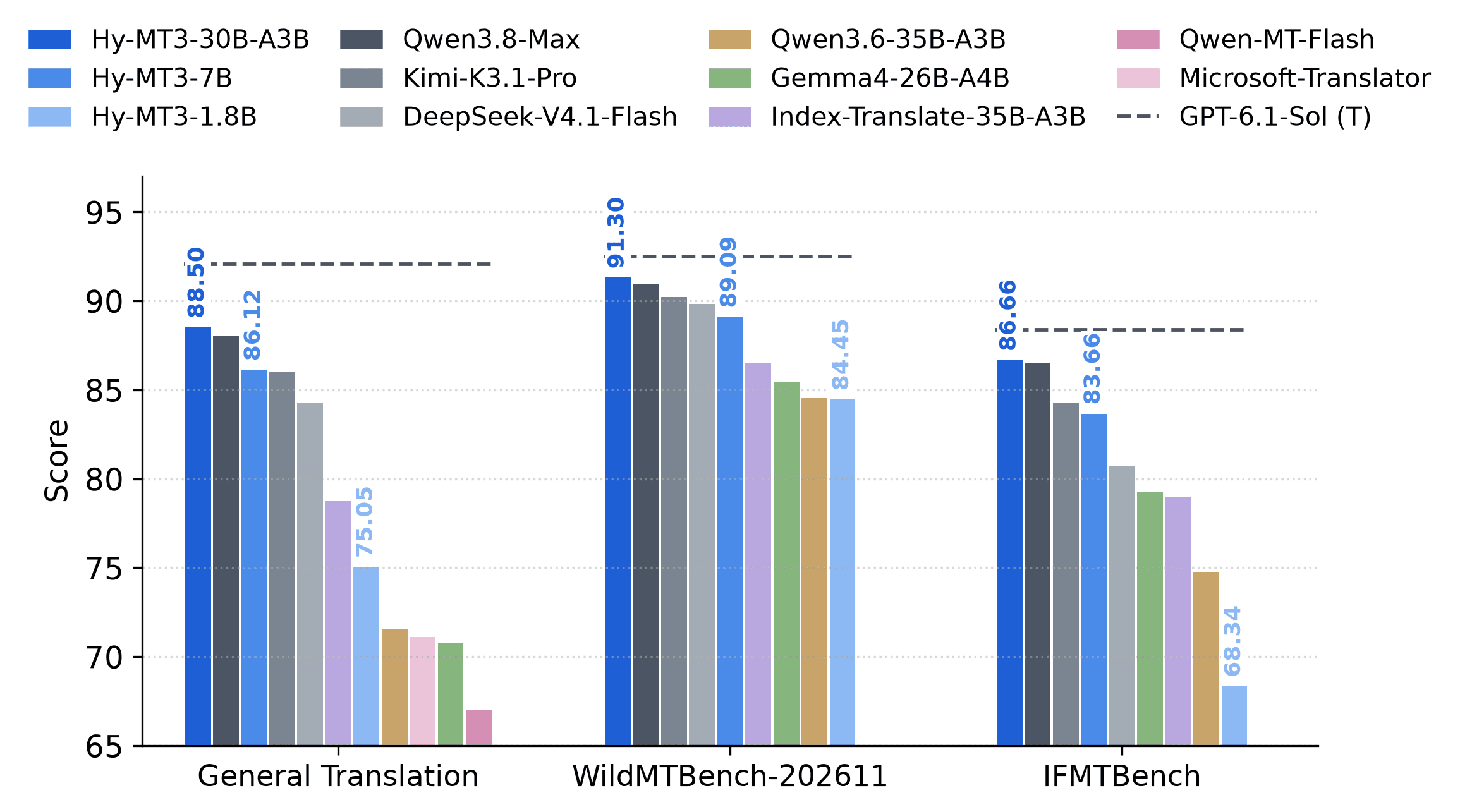
Tencent's Hy-MT3: translation in 102 languages, open
Tencent has open-sourced Hy-MT3, a translation family with 1.8B, 7B, and 30B-A3B parameters covering 102 languages. See what the numbers say, how they were measured, and the limitations.
6 min
Benchmarks
RoboTrack-Bench: point trackers fall short in real-world robotics
Ai2 released RoboTrack-Bench and RoboTracker. Leading trackers lose 3.0 to 6.6 AJ on real robotic manipulation videos. See the method and limitations.
5 min
Benchmarks
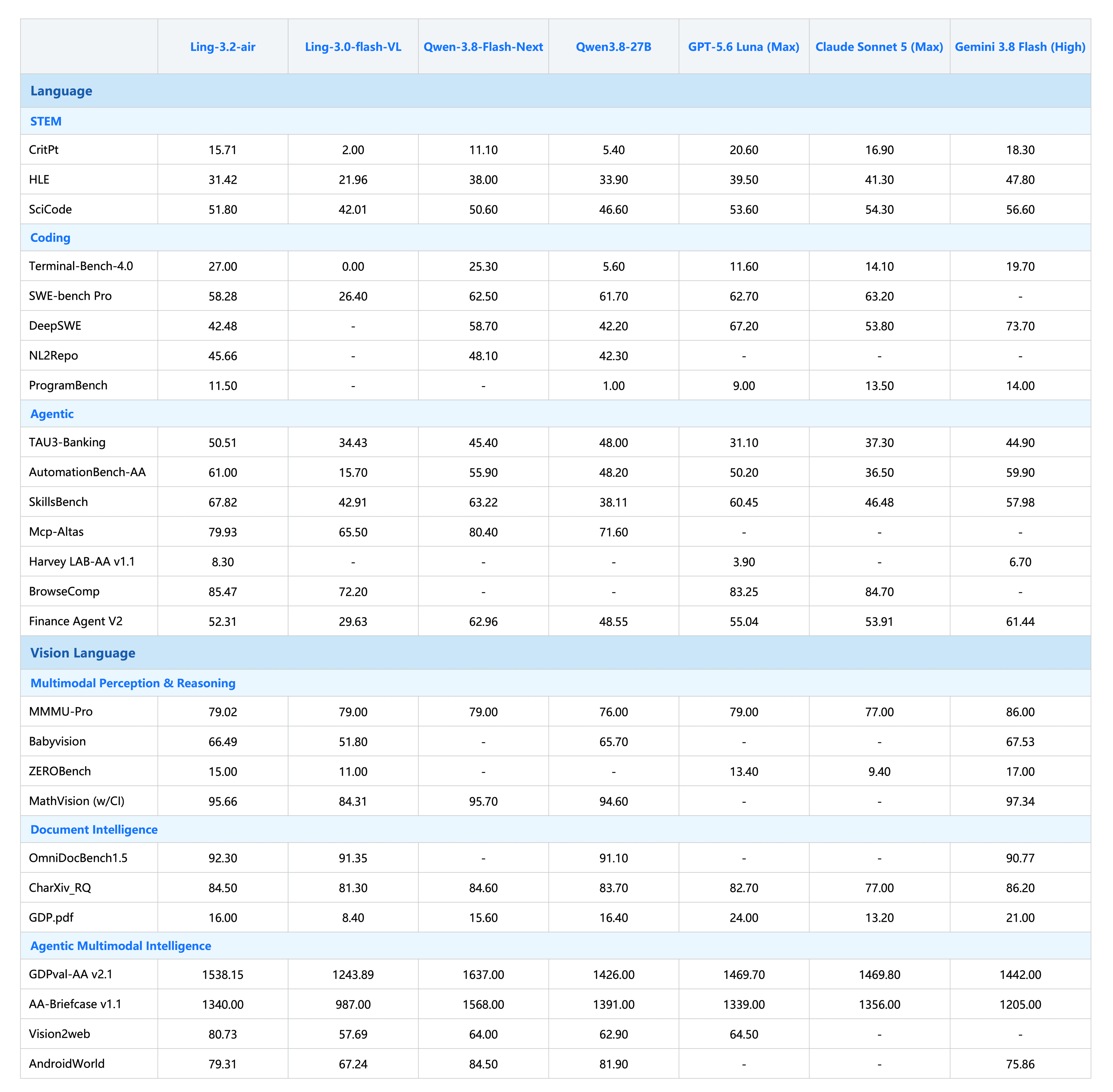
Ling-3.2-air scores 23 on Intelligence Index with 5.5B active
inclusionAI released Ling-3.2-air: 124B total, 5.5B active, 1M context, MIT license, and 23 on the Intelligence Index. See the numbers and the limits.
5 min