Runway Praxis-1: 46.2% on RoboLab-120 with open weights
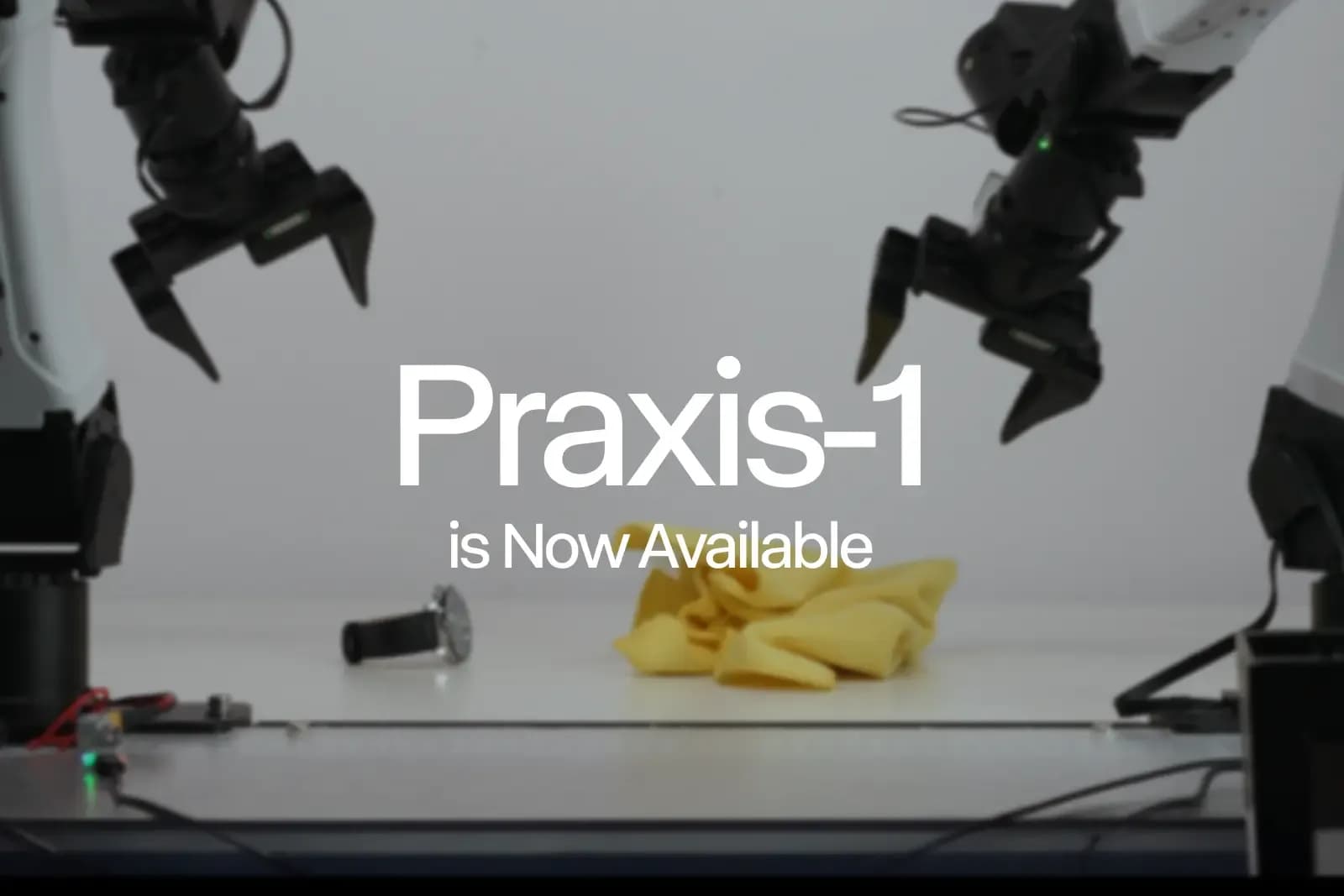
Runway has opened the weights for Praxis-1, an action and world model for robotics, under Apache 2.0. The company reports 46.2% on RoboLab-120; see the numbers and the caveats.
Runway released the Praxis-1 weights, a world action model for robotics, on November 11, 2026, under the Apache 2.0 license. The company reports 46.2% success on RoboLab-120. All figures below are disclosed by the company and have not been reproduced by us.
The biggest AI newsletter in the World
Get AI articles in your inbox
Technical curation on models, agents and coding tools. No spam, unsubscribe anytime.
Table of Contents
What is Praxis-1
The RoboLab-120 result
What is open and where to run it
Adapting to new robots
Why video as pre-training
How to test with your team
What is Praxis-1
According to Runway, Praxis-1 is a 27-billion-parameter world action model, a diffusion transformer with mixture of experts that predicts video and actions together. It originates from the same large-scale video pre-training as the company's world models.
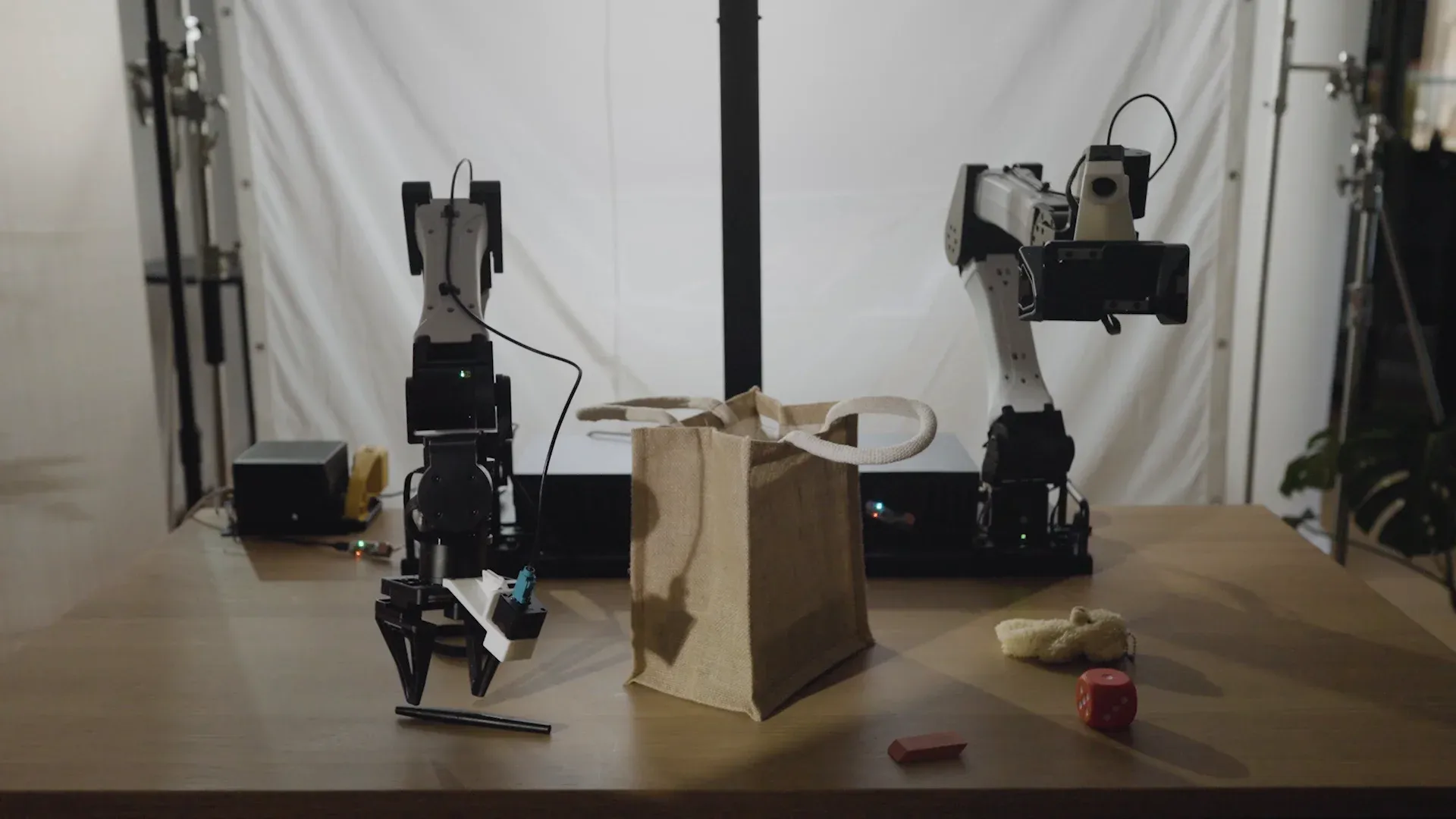
The company introduced it in September, and since then partners such as Noble Machines, Standard Bots, and Ultra have run it on their own hardware: a legged humanoid, a six-axis industrial arm, and a dual-arm warehouse robot. On November 11, the model became open to any developer, per the official announcement.
Imagem: Runway
The RoboLab-120 result
Runway states that Praxis-1 is the top world action model on the NVIDIA RoboLab-120 leaderboard and that it outperforms all open-weight VLAs. The reported rate is 46.2% success across 1,200 episodes, with data from November 2026.
Model
RoboLab-120 Success
Praxis-1
46.2%
FLUX 3 Action
42.9%
Cosmos3 Nano
36.8%
π0.5
28.0%
The gap to the runner-up is 3.3 percentage points. Since the number comes from Runway itself, it is worth checking the leaderboard and rerunning the evaluation on your own tasks before drawing conclusions. In robotics, the test environment matters as much as the model.
What is open and where to run it
Everything is released under Apache 2.0, including for commercial use: the weights and the inference and fine-tuning code, with support for full fine-tuning and LoRA. The model is on GitHub, on Hugging Face with native LeRobot support, and on vLLM-Omni, with hosted inference on Reactor.
According to the company, it runs directly on NVIDIA hardware, from data-center GPUs such as H100 and B200, through workstation GPUs like RTX 5090 and RTX PRO 6000, down to Jetson Thor, which sits on the robot itself. Runway also points to post-training tutorials with NeMo Automodel.
Adapting to new robots
Runway says a single checkpoint adapted to multiple robot bodies with light fine-tuning. With LoRA, the idea is to adapt the model to your robot, your cameras, and your tasks without retraining everything.
The disclosed example uses Google's RT-1 robot, which did not appear in training. After fine-tuning, Praxis-1 reached 80.0% success on SimplerEnv, versus 52.4% for the original RT-1 policy. This is a single case, chosen by the company, and not a guarantee for other robots.
Why video as pre-training
The research page argues that the bottleneck for a capable robot policy becomes the amount of general video the model can learn from. Real robot data is scarce and expensive, while video is abundant.
A chart from the research compares final positioning error after fine-tuning: 16.1 cm with web video and 16.0 cm with teleoperated robot video, both trained from scratch. Runway itself notes that differences smaller than the error bar are not significant.
The company also reports that simulating robot policies inside its world model predicts real-world results with 0.95 correlation. This number comes from the research page and is also self-reported.
How to test with your team
Our recommendation is to treat Praxis-1 as a candidate, not a verdict. Pick two or three of your robot's tasks, define the success criterion upfront, and compare against the policy you use today, with the same number of episodes.
Then repeat with LoRA and with full fine-tuning to measure the real gain from each path. To see how other benchmarks handle robots and physical engineering, read ToyBlocks and PLE. For context on open models competing for position, see Ripple 65B Preview.
Frequently asked questions about Runway's Praxis-1
What is Praxis-1?
+
According to Runway, it is a 27-billion-parameter action and world model, a diffusion transformer with mixture of experts that predicts video and actions together, released under Apache 2.0 on November 11, 2026.
What was the result on RoboLab-120?
+
The company reports 46.2% success across 1,200 episodes, compared to 42.9% for FLUX 3 Action, 36.8% for Cosmos3 Nano, and 28.0% for π0.5. The data is disclosed by the company.
Can I use Praxis-1 commercially?
+
Yes. According to Runway, the weights, inference code, and fine-tuning code are released under Apache 2.0, including for commercial use, with support for full fine-tuning and LoRA.
What hardware does it run on?
+
Runway cites NVIDIA data center GPUs (H100, B200), workstation GPUs (RTX 5090, RTX PRO 6000), and the Jetson Thor, on the robot itself.
Have the numbers been independently verified?
+
Not by bridgecode. All results are disclosed by Runway and should be reproduced on your tasks before any decision.
Conclusion
Praxis-1 shows that open weights, video as a foundation, and a commercial license can already fit in the same robotics package. What's still missing is independent validation, which is only possible now that the code and weights are public.
Every robot evaluation experiment needs its own environment, and that goes for software agents testing these models too. Running variations in parallel, each isolated, prevents one from contaminating another's results.
Testing multiple action models at once requires parallel AI agents, each in its own isolated space. Start orchestrating on bridgecode.
Developer and creator of bridgecode, an agentic development environment for orchestrating squads of AI agents. Helps people going from vibe coding to professional development move from idea to shipped product.