
The Multimodal Knowledge Agent (MKA) benchmark launched on November 10, 2026. Google DeepMind released the evaluation in partnership with Artificial Analysis to assess AI agents with complex visual files. In the report, the Gemini 4 Carbon model placed second in quality, but completed tasks at an average cost roughly 6x lower than the highest-scoring model.
Benchmarks6 min
How Gemini 4 Carbon beats the MKA leader on price
Gemini 4 Carbon ranks second in MKA quality, but 6x cheaper than the leader. See the official numbers.
The biggest AI newsletter in the World
Get AI articles in your inbox
Technical curation on models, agents and coding tools. No spam, unsubscribe anytime.
What changes in practice? A frontier configuration, typically the most expensive, stops being out of reach for teams that previously only used fast, cheap models.
In this article you will see:
- What the MKA benchmark is and what it measures
- How Gemini 4 Carbon stood out in the results
- Why cost efficiency gained weight in this scenario
What Is the Multimodal Knowledge Agent Benchmark?
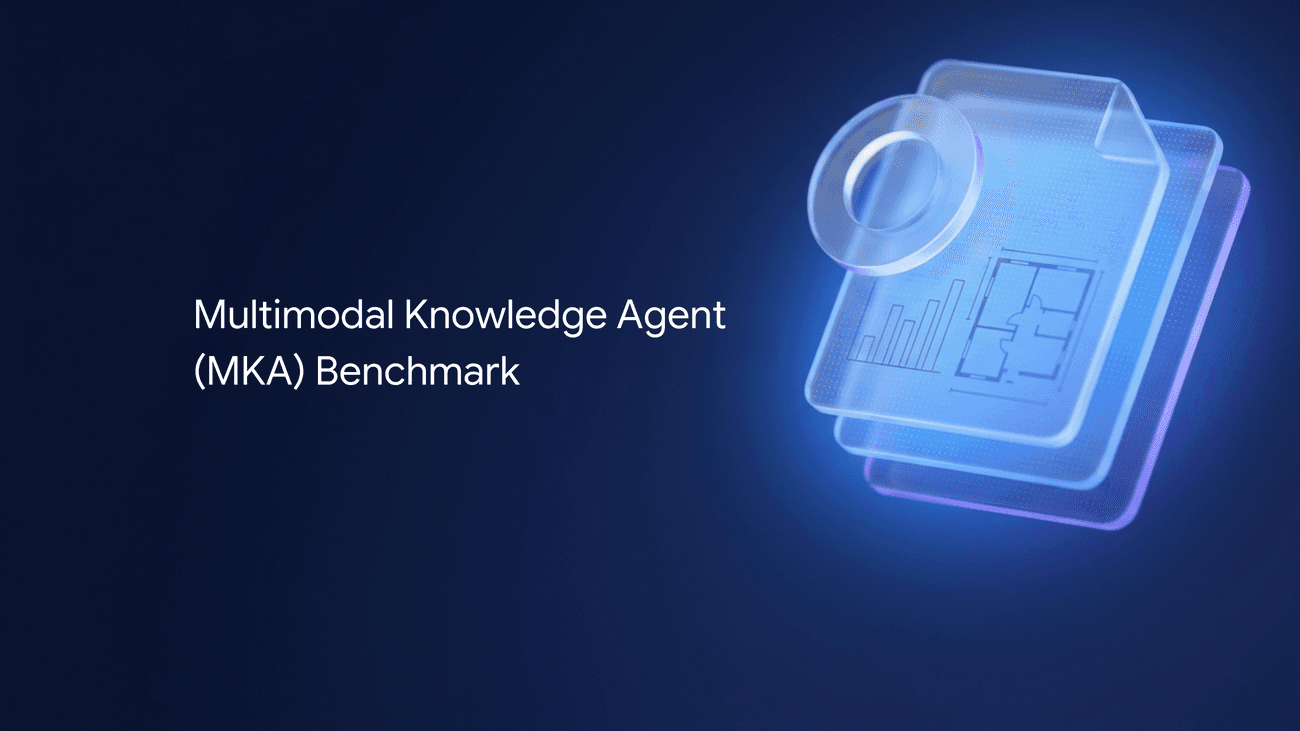
MKA is an evaluation launched in partnership with Artificial Analysis. Unlike tests that measure only short responses or text generation, it assesses how an agent reasons with complex visual files, charts, spreadsheets, scanned documents, application screens, to fulfill a knowledge task.
Each task is a multi-step project: a realistic prompt, a package of input files, and a rubric of about 70 yes/no checks. The rubric weights 75% for factual accuracy and 25% for visual design, forcing the model to present the right information in a readable way.
The benchmark captures what happens in real projects. A task may start with a chart and end with a business recommendation, requiring reading of both visuals and data.
How Gemini 4 Carbon Stood Out in the Results
In the report, Google discloses that Gemini 4 Carbon placed second in quality among the models tested. In scenarios with visual input and multimodal decision-making, Google's frontier model maintains a quality scale very close to the class leader, on tasks that demand visual detail.
The performance drop that appears in image benchmarks is smaller here. Many models lose points when the file is not pure text: poorly labeled screenshots, charts without legends, scanned documents. MKA penalizes exactly this type of failure, and Carbon appeared stable.
Careful reading prevents a naive conclusion. The post does not promise the model is better at everything. Quality ties with the evaluation leader. What distinguishes Carbon is the perception that frontier performance does not need to be expensive for every task. Other agent rankings, such as Terminal-Bench 4.0, show a similar movement in code and terminal evaluations. See how agents perform in terminal operations
Why cost efficiency carried more weight in this result
The most notable reason for the MKA is the cost difference. Google reports that Gemini 4 Carbon completes tasks at an average cost roughly 6x lower than the highest-quality model. In simple terms: the top-tier model delivers similar performance, but Carbon does the job more cheaply.
For teams running agents daily, cost is not a detail. Every agent that reads a screenshot, analyzes a chart, or fixes a visual file adds to the bill. Sending the task to the cheaper model when quality is equivalent directly reduces the cost per project.
The efficiency reading is reinforced by the fact that the result is not an accident. Google states that Carbon sits on the Pareto frontier between quality and price in the MKA benchmark, meaning that, within what was evaluated, no model offers more quality for a lower price.
The decision entering the current debate: the choice between expensive and cheap models is no longer a simple dichotomy. The market gains a third tier: a frontier model that delivers credible quality at an efficiency price.
Frequently asked questions about the MKA and Gemini 4 Carbon
What is the MKA and how does it work?
It is an agent benchmark that evaluates reasoning with complex visual files. Each task simulates a multi-step project, with a realistic prompt, input files, and a rubric of about 70 yes/no checks, 75% factual accuracy, and 25% visual design.
Is Gemini 4 Carbon the best model on the MKA?
No. Google reports that it placed second in quality among the models tested. Carbon's highlight is cost efficiency: it completed tasks at an average cost roughly 6x lower than the highest-scoring model.
How is the MKA different from other benchmarks?
Most benchmarks measure text generation or code tasks. The MKA demands reasoning with complex visuals, which requires factual accuracy and good visual presentation, as well as identifying failures in images and scanned documents.
Are the MKA results from the current version of the benchmark?
Yes. The launch took place on November 10, 2026, in partnership with Artificial Analysis, and the launch report is the primary source for the cited numbers.
What changes for those programming with agents now
The result reinforces a practical shift: model selection is no longer a simple trade-off between price and quality. Gemini 4 Carbon shows that it is possible to have a frontier configuration with reliable quality and a much lower execution cost than the top-tier model.
For those orchestrating agents in real projects, this means more freedom to assign each task to the right model, instead of sending everything to a single expensive model. The benchmark reinforces the reading that model choice should be made per task, not by default, as BenchLeader consolidates in its aggregated benchmark index. See how the aggregated benchmark index behaves in daily use
Frequently asked questions about Gemini 4 Carbon and the MKA benchmark
What is MKA and how does it work?
It's an agent benchmark that evaluates reasoning with complex visual files. Each task simulates a multi-step project, with a realistic prompt, input files, and a rubric of about 70 yes/no checks, 75% factual accuracy and 25% visual design.
Is Gemini 4 Carbon the best model on MKA?
No. Google reports it placed second in quality among tested models. Carbon's highlight is cost efficiency: it completed tasks at an average cost about 6x lower than the top-scoring model.
How is MKA different from other benchmarks?
Most benchmarks measure text generation or coding tasks. MKA demands reasoning with complex visuals, requiring factual accuracy and good visual presentation, plus identifying flaws in images and scanned documents.
Are the MKA results from the current benchmark version?
Yes. The launch occurred on November 10, 2026, in partnership with Artificial Analysis, and the launch report is the primary source for the cited numbers.
Conclusion
The next step is not to swap the entire stack at once. Take a complex visual task, run it with Carbon, compare quality with the more expensive model, and observe the cost. If the difference is small, the agent only gains in efficiency and savings.
The same applies to the product team: there is no need to buy the most expensive solution to get the right solution. With the MKA releasing on November 10, the market gains its own tool to decide what to run on top of each task.
To test Gemini 4 Carbon in your workflow and compare it with the more expensive model, run each AI agent in parallel, in its isolated space. Check out bridgecode.
Source: Google Blog
Tags:#radar#ia

Developer and creator of bridgecode, an agentic development environment for orchestrating squads of AI agents. Helps people going from vibe coding to professional development move from idea to shipped product.
Related articles
Benchmarks
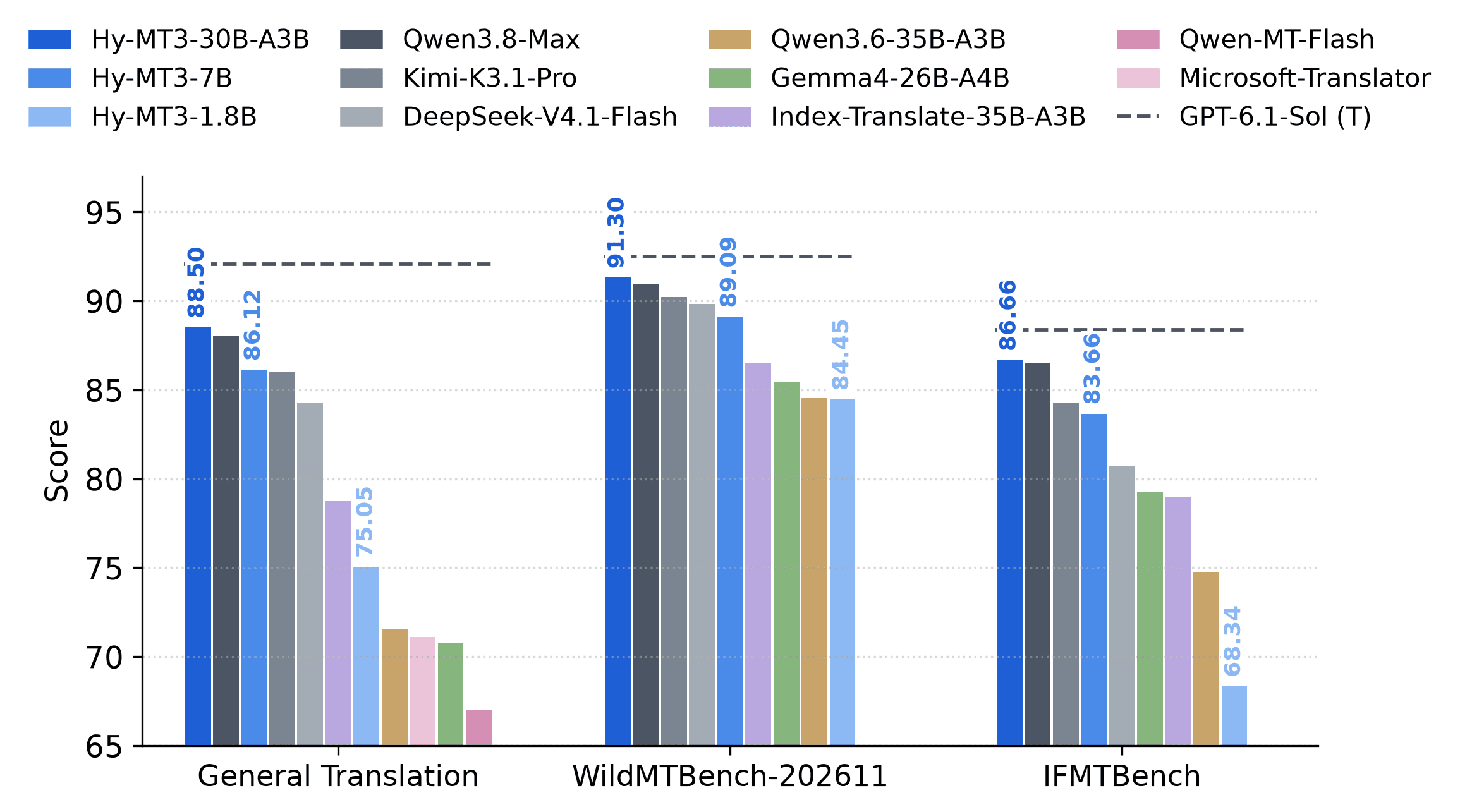
Tencent's Hy-MT3: translation in 102 languages, open
Tencent has open-sourced Hy-MT3, a translation family with 1.8B, 7B, and 30B-A3B parameters covering 102 languages. See what the numbers say, how they were measured, and the limitations.
6 min
Benchmarks
Cognition's SWE-2.1: Terminal-Bench 4.1 and FrontierCode
Cognition released SWE-2.1: 50.0 on Terminal-Bench 4.1 and 41.3 on FrontierCode 2.0, versus 24.2 and 24.1 for SWE-2. See the numbers, method, and limits.
5 min
Benchmarks
RoboTrack-Bench: point trackers fall short in real-world robotics
Ai2 released RoboTrack-Bench and RoboTracker. Leading trackers lose 3.0 to 6.6 AJ on real robotic manipulation videos. See the method and limitations.
5 min