
The official Arena account announced on October 26, 2026 that GPT-6.1 Terra joined Agent Arena. The post says scores will still be released, so the inclusion does not indicate a position or a benchmark result.
GPT-6.1 Terra joins Agent Arena, scores still pending
Arena has added GPT-6.1 Terra to long tasks with web, filesystem and terminal access, and the official account said scores will still be released.

Marcelo Santiago
Criador do bridgecode
The biggest AI newsletter in the World
Get AI articles in your inbox
Technical curation on models, agents and coding tools. No spam, unsubscribe anytime.
The same post describes Agent Arena as an evaluation of long tasks with tools. According to Arena, models can use web search, file system and terminal in real tasks gathered from a global community.
In this article you will see:
- What Arena announced about GPT-6.1 Terra
- Which tools and tasks the post mentions
- Why the entry is not a score or ranking
- How to interpret the results when they are published
What Arena announced about GPT-6.1 Terra
The confirmed news is the availability of GPT-6.1 Terra inside Agent Arena. The announcement was published by the official Arena account on October 26 and invites the community to test the model in the environment.
The post adds an important caveat: “scores coming soon”, that is, scores were not yet available at the time of the announcement. There is no score, position or numerical comparison to attribute to GPT-6.1 Terra based on this publication.
This is also not a new model release. OpenAI had already announced GPT-6.1 Terra for other environments, including API and Codex, as we explained in GPT-6.1 Terra arrives at API and Codex. The new fact here is the entry into an agent evaluation platform.
What tasks Agent Arena says it evaluates
Arena describes Agent Arena as an evaluation of long tasks executed by agents. A long task normally requires a sequence of actions and checks, not just an isolated answer to a question.
In the post, the account states that the environment can offer web search, file system access and terminal. This allows observing whether a model can use tools in a task, but the announcement does not detail the distribution of tasks assigned to GPT-6.1 Terra.
Arena also says that tasks come from a global community and involve millions of real world interactions. That number is a description of the platform, not the size of the specific sample used to calculate the future score of GPT-6.1 Terra.
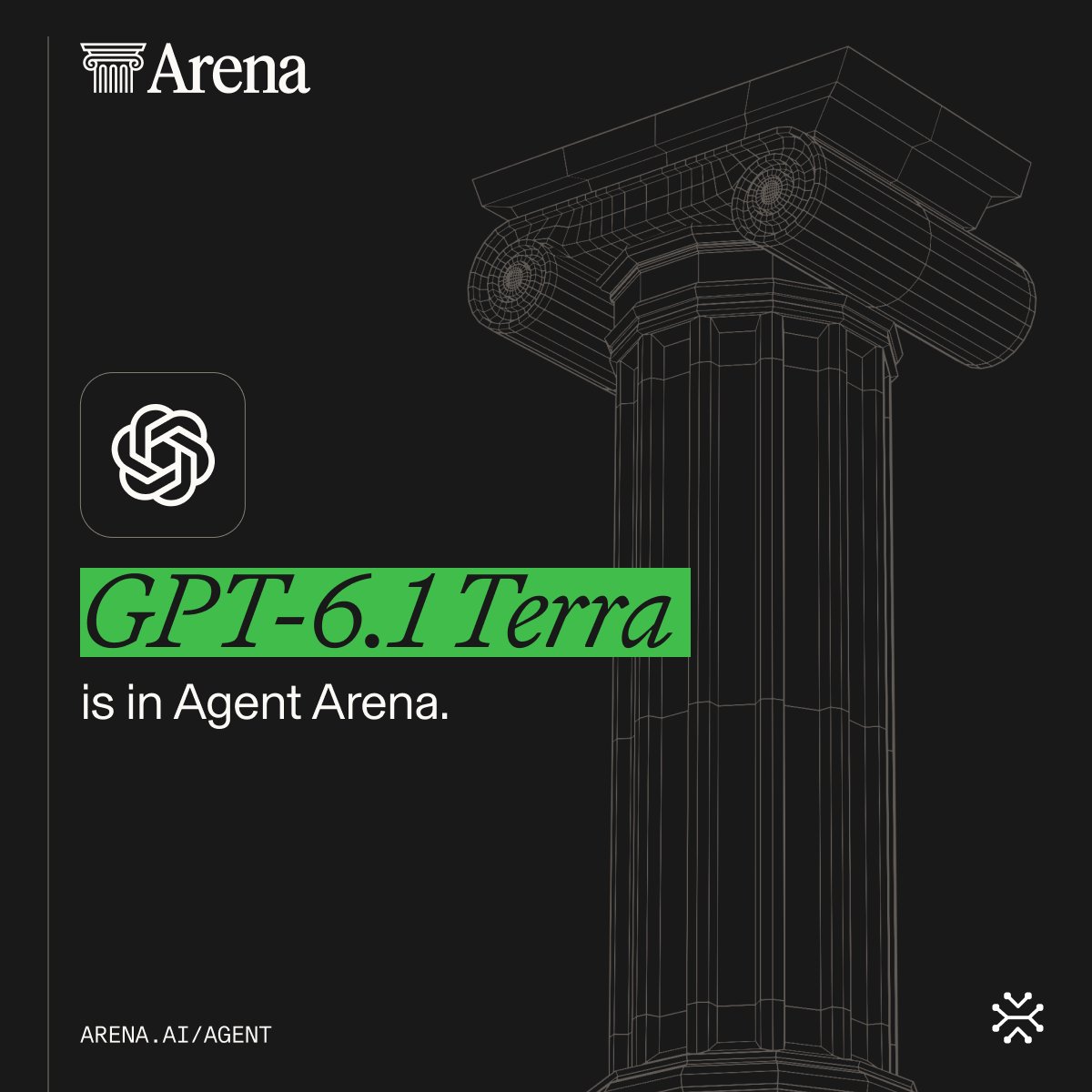
The card was published together with the entry announcement. It confirms the model’s availability on Arena, not a test result or a win over another agent.
Why the inclusion of GPT-6.1 Terra is still not a benchmark
Presence in an agent arena means the model can be evaluated in that environment. It does not by itself mean it has completed more tasks, used fewer resources or outperformed a competitor.
The announcement does not report a score, a position, a success rate, latency or the number of sessions specific to GPT-6.1 Terra. It also does not describe, in this post, which tasks make up the evaluation that will receive the result.
For that reason, the title and summary of this post address availability, not performance. Comparing Terra to another model before Arena publishes the score would be anticipating a conclusion that the source has not yet presented.
The distinction matters because agents can receive different tools and permissions. A score is only interpretable when you know which actions were allowed, which tasks were used and how Arena aggregated the results.
How to interpret the scores when Arena publishes them
When results are available, first check the snapshot date and the agent configuration. Models with access to different tools or different time limits are not being compared under identical conditions.
Also observe the task type. An agent can be strong in browser research and weaker in file editing or command execution. An aggregate ranking can hide this difference between work steps.
If you reproduce a task, keep the same instructions, tools and permissions for each model. Record completion, errors, time, consumption and how much human work was needed to validate the result.
The Arena has already published results of other models in its Agent Arena. For example, the post about the Kimi K3.1 Pro in 11th place in the Agent Arena shows how a position and a metric should be read with the date and the evaluation scope.
Frequently asked questions about GPT-6.1 Terra's entry into Agent Arena
What is Agent Arena?
Agent Arena is described by Arena as an evaluation of long agent tasks, using tools like web search, filesystem and terminal.
Does GPT-6.1 Terra already have a score on Agent Arena?
No. The official post says scores will still be released; it confirms the model's entry, not a score or ranking.
What tools can models use in Agent Arena?
Arena's publication mentions web search, filesystem and terminal. It does not detail the exact distribution of these tasks for GPT-6.1 Terra.
Is the entry into Agent Arena a new launch of GPT-6.1 Terra?
No. The announcement is about GPT-6.1 Terra's availability for testing in Arena; the model had already been announced in other environments, such as API and Codex.
The GPT-6.1 Terra entry opens a new test, not a verdict
For developers, the news creates a new option to experiment with GPT-6.1 Terra on tasks with tools. The usefulness will depend on the results and the details that Arena has not yet published.
Until then, treat the inclusion as test availability. When the scores come out, compare conditions and tasks before concluding if the model is suitable for your flow.
An evaluation helps choose the model; a project still needs planning, execution and review. See how to coordinate agents at bridgecode.
Source: Arena
Tags:#Arena#Agent Arena#GPT-6.1 Terra#agentes de IA#avaliação de agentes#ferramentas de programação
Developer and creator of bridgecode, an agentic development environment for orchestrating squads of AI agents. Helps people going from vibe coding to professional development move from idea to shipped product.
Related articles
Newsletter
MOSS-Live: real-time conversation that doesn't stop when you talk
OpenMOSS published MOSS-Live on November 7, 2026, a full-duplex system that keeps the conversation flowing while the assistant responds and runs tasks in the background.
6 min
Newsletter
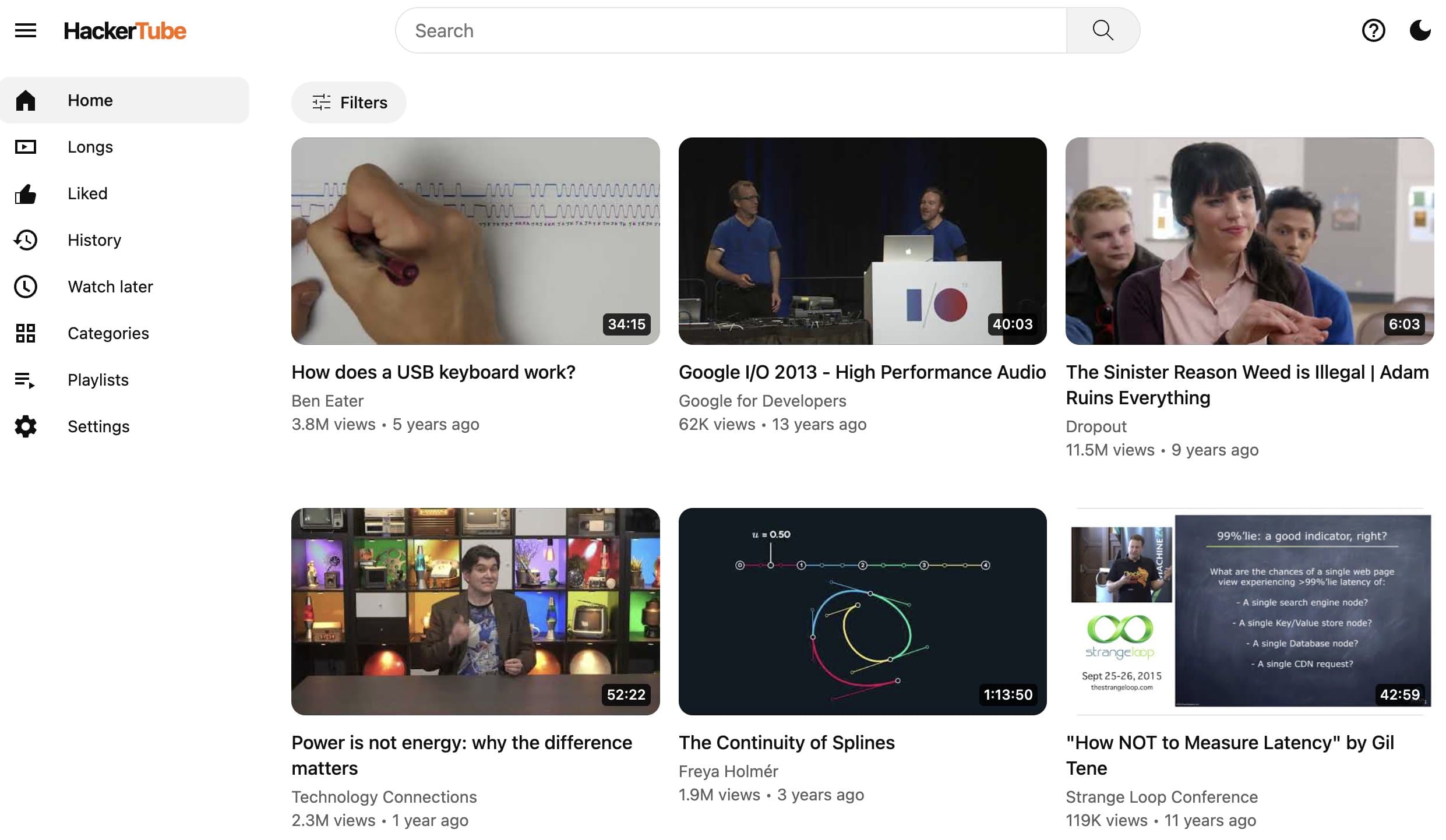
Karpathy builds a video platform over a weekend with Claude
Andrej Karpathy built HackerTube in a weekend with Claude. What it says about development speed with coding agents.
5 min

Newsletter
Rich Sutton reinforces that compute alone does not create intelligence
Turing Award winner Rich Sutton reinforces that raw compute is not enough for intelligence and calls for new methods, continuous learning and world models.
5 min