
The ai-sage team, behind the GigaChat family, published GigaChat 4 on Hugging Face, an open-weight language model with 708B total parameters and 41B active per token. The release date in public records is November 26, 2026.
Benchmarks6 min
GigaChat 4 708B: SWE-bench 80.9 and 1M Context, MIT
ai-sage released GigaChat 4, a 708B MoE with 41B active parameters, 1M context, and an MIT license. See the SWE-bench, Terminal-Bench numbers and the limits of the comparison.
The biggest AI newsletter in the World
Get AI articles in your inbox
Technical curation on models, agents and coding tools. No spam, unsubscribe anytime.
What stands out is the combination of MIT license, 1-million-token window, and 80.89% on SWE-bench Verified. All numbers below come from the official model card and are reported by the authors, without independent reproduction.
In this article you will see:
- What GigaChat 4 is and what changed from 3.5
- Results in coding, agents, and reasoning, and where it falls short
- How testing was done and what the limits are
- Required hardware and how to connect the model to Codex CLI
What is GigaChat 4 708B
GigaChat 4 is a Mixture of Experts (MoE) model, an architecture where only a portion of parameters works on each token. Here, 8 of 256 routed experts are active, plus 1 shared expert, giving 41B active out of 708B.
Unlike GigaChat 3.5, which had separate checkpoints for instant responses and reasoning, the new model combines both modes in one. The choice is made per request, with the parameter chat_template_kwargs.reasoning.
The family has five repositories for the large model: FP8, GGUF, BF16, base, and intermediate checkpoints. There is also a smaller version, 37B with 4B active, which is not the focus of this article.
Hybrid attention and 1M context
The model interleaves Gated DeltaNet layers, which maintain a fixed-size recurrent state, with DeepSeek Sparse Attention (DSA) layers, which attend to 2,048 previous tokens per query. The ratio is 3:1: 48 linear layers and 16 sparse layers.
Context was stretched from 32K to 128K and then to 1,048,576 tokens. For speculative decoding, a technique that speeds up generation by verifying multiple tokens at once, there are two options: recurrent MTP and a drafter called DFlash2.
Results in coding and agents
The authors compare the model with GigaChat 3.5 Ultra 432B, DeepSeek V4 Flash 0731, GLM-5.3, DeepSeek 4.1 1017, Qwen 3.5 397B, and Mistral 4 Large. In coding, in reasoning mode, the numbers are:
- SWE-bench Verified: 80.89 (GLM-5.3: 86.67; DeepSeek V4 Flash 0731: 81.80; DeepSeek 4.1: 79.40)
- Terminal-Bench 2.0: 71.26 (GLM-5.3: 71.67; Mistral 4 Large: 77.78)
- Terminal-Bench 2.1: 69.66 (GLM-5.3: 88.70; DeepSeek 4.1: 87.64)
- LiveCodeBench v6: 88.82 (DeepSeek 4.1: 90.14)
- DeepSWE: 35.40 (DeepSeek 4.1: 74.34; GLM-5.3: 67.26)
The gain over the predecessor is large: SWE-bench Verified went from 64.70 on 3.5 Ultra to 80.89, and Terminal-Bench 2.0 from 30.30 to 71.26. But against current rivals the model sits in the middle of the pack.
In agents, BFCL v4 tool calling scores 79.55, the best in the table, and τ²-Bench reaches 83.31, tied with DeepSeek V4 Flash 0731. CoworkBench scores 83.00, also the top among those compared.
Where GigaChat 4 falls behind
In science and knowledge, the gap shows. On GPQA Diamond it scores 82.83, against 91.00 from DeepSeek V4 Flash 0731, and on HLE without tools it scores 23.91, against 43.42 from DeepSeek 4.1.
On τ³-Bench Banking, the result is 18.03 against 56.00 from GLM-5.3. In other words, the model is strong at following instructions and using tools, but does not lead in scientific reasoning or long banking tasks.
Instant mode: SWE-bench nearly equal
The most curious data point is instant mode. On SWE-bench Verified it scores 80.82, practically equal to reasoning mode, and on Terminal-Bench 2.1 it scores 66.29. For coding workflows, this suggests fast response without losing much.
In math, however, instant mode drops significantly: AIME 2025 at 8-attempt average goes from 93.33 in reasoning to 68.75. Those who need math should enable reasoning.
How the benchmark was run and what the limits are
The agentic tests used Harbor-based runners, except for DeepSWE, which used Pier. The SWE-bench, Terminal-Bench, and DeepSWE runs had a 7-hour limit, well above the standard on many public leaderboards.
NL2Repo reports cheat-adjusted scores, counting attempts to game the test as zero. HLE uses text-only questions, no tools. Some rival results come from other sources, which can mix conditions.
Limits to keep in mind:
- All numbers are from the authors, with no independent evaluation so far
- The 7-hour timeout is not comparable to leaderboards with shorter limits
- Dashes in the table indicate unreported results, not zero
- Cost per task and real-world latency were not disclosed in the model card
How to run GigaChat 4 today
The model is natively supported by SGLang, with recurrent MTP, DFlash2, per-request mode selection, and tool calling. The install command in the model card pins a tested commit:
Terminal
python3 -m pip install \
"sglang @ git+https://github.com/sgl-project/sglang.git@ff142897935ec6ede004dea8439d6111110bd446#subdirectory=python"The BF16 variant needs roughly 1.4 TB of GPU memory for weights alone. The official example uses four nodes with eight 80 GB H100s (TP32). The FP8 variant reduces that requirement but remains datacenter-grade infrastructure.
To use the model with Codex CLI, the model card asks for a Responses API-compatible endpoint and provides this profile, saved in ~/.codex/gigachat.config.toml for version 0.134.0 or later:
TOML · ~/.codex/gigachat.config.toml
model = "ai-sage/GigaChat4-708B-A41B-bf16"
model_provider = "gigachat"

[model_providers.gigachat]
name = "GigaChat 4"
base_url = "http://127.0.0.1:30000/v1"
wire_api = "responses"
If you want to compare with other recent open models, see the inclusionAI Ling-3.2-air on the Intelligence Index, the Thinking Machines Inkling 2 Mini, and the K2-Horizon with six open models. More comparisons live in the benchmark category.
Frequently asked questions about GigaChat 4 708B
Is GigaChat 4 708B open?
Yes, the 708B model is released under the MIT license, with weights in FP8, BF16, and GGUF on Hugging Face. The smaller 37B version uses a non-commercial license for individuals, according to the llm-releases tracker.
How much hardware does GigaChat 4 708B require?
A lot. The BF16 version needs about 1.4 TB of GPU memory just for the weights. The official example uses four nodes with eight 80 GB H100s each, with tensor parallelism of 32.
What is GigaChat 4's result on SWE-bench Verified?
80.89% in reasoning mode, with a 7-hour limit, and 80.82% in instant mode. The numbers are self-reported by the authors, not by an independent evaluator.
Does GigaChat 4 outperform GLM-5.3 and DeepSeek 4.1?
Not generally. In the official table, GLM-5.3 scores 86.67 on SWE-bench Verified and DeepSeek 4.1 1017 scores 79.40, so GigaChat 4 sits in the middle on that test and trails in several others, such as DeepSWE and Terminal-Bench 2.1.
How to run GigaChat 4 with Codex CLI?
Point a Codex CLI profile to an SGLang server with the Responses API. The model card includes the file ~/.codex/gigachat.config.toml for version 0.134.0 or later.
GigaChat 4 for developers building with agents
GigaChat 4 is a large open model that steps up in code and tooling, but does not lead in science. Its strength lies in engineering tasks with tool calling and long context, provided you have the infrastructure to host it.
For most teams, the practical path is to wait for independent evaluations and inference providers. Until then, the model card numbers serve as a signal, not a verdict.
Source: ai-sage on Hugging Face
Tags:#GigaChat 4#Sber#modelo aberto#SWE-bench#benchmark

Developer and creator of bridgecode, an agentic development environment for orchestrating squads of AI agents. Helps people going from vibe coding to professional development move from idea to shipped product.
Related articles
Benchmarks
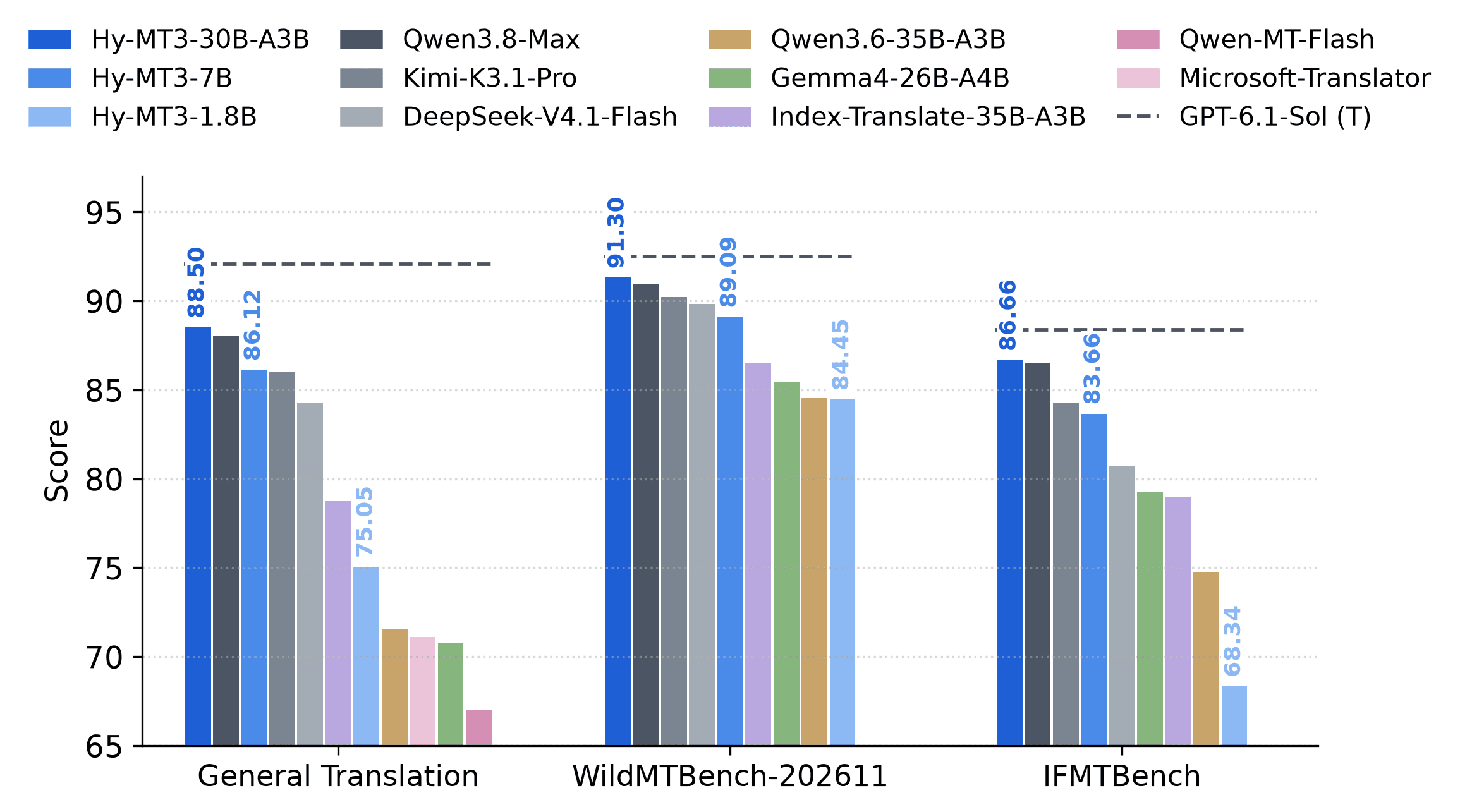
Tencent's Hy-MT3: translation in 102 languages, open
Tencent has open-sourced Hy-MT3, a translation family with 1.8B, 7B, and 30B-A3B parameters covering 102 languages. See what the numbers say, how they were measured, and the limitations.
6 min
Benchmarks
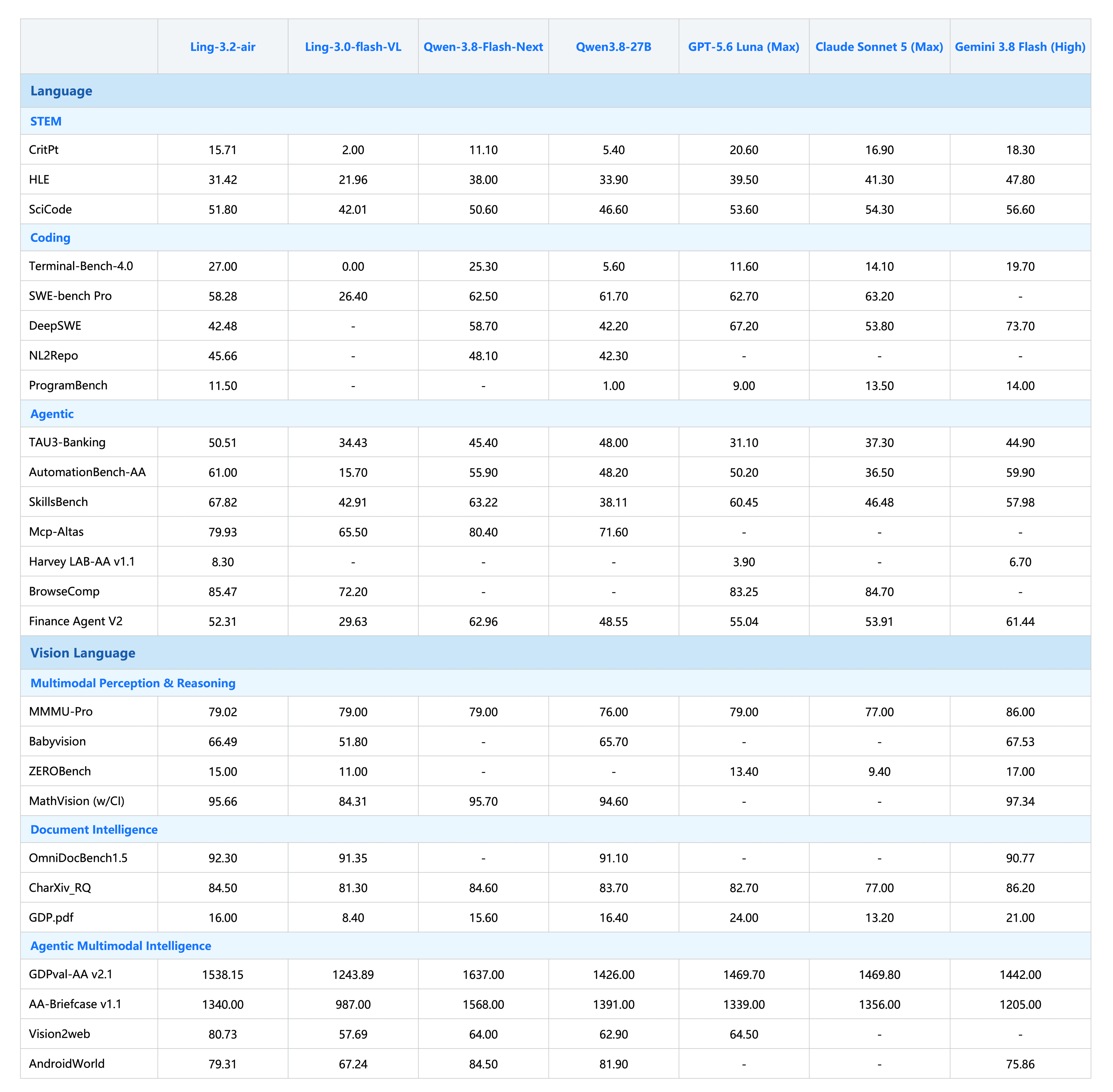
Ling-3.2-air scores 23 on Intelligence Index with 5.5B active
inclusionAI released Ling-3.2-air: 124B total, 5.5B active, 1M context, MIT license, and 23 on the Intelligence Index. See the numbers and the limits.
5 min
Benchmarks
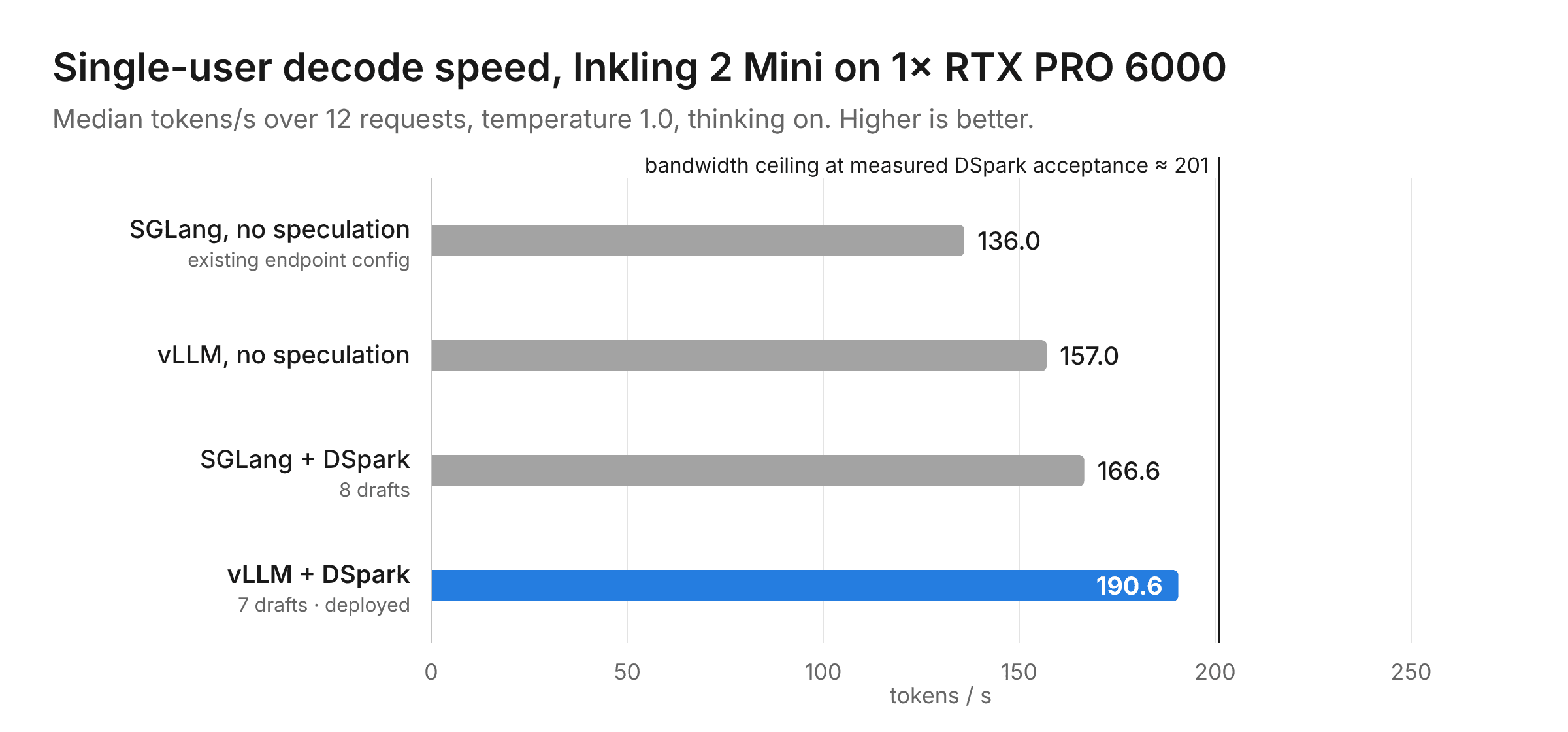
Inkling 2 Mini reaches 190 tok/s with vLLM and DSpark
Hugging Face tested Inkling 2 Mini on an RTX PRO 6000: from 136 to 190.6 tok/s with vLLM and DSpark. See the method, the numbers, and the limits.
6 min