
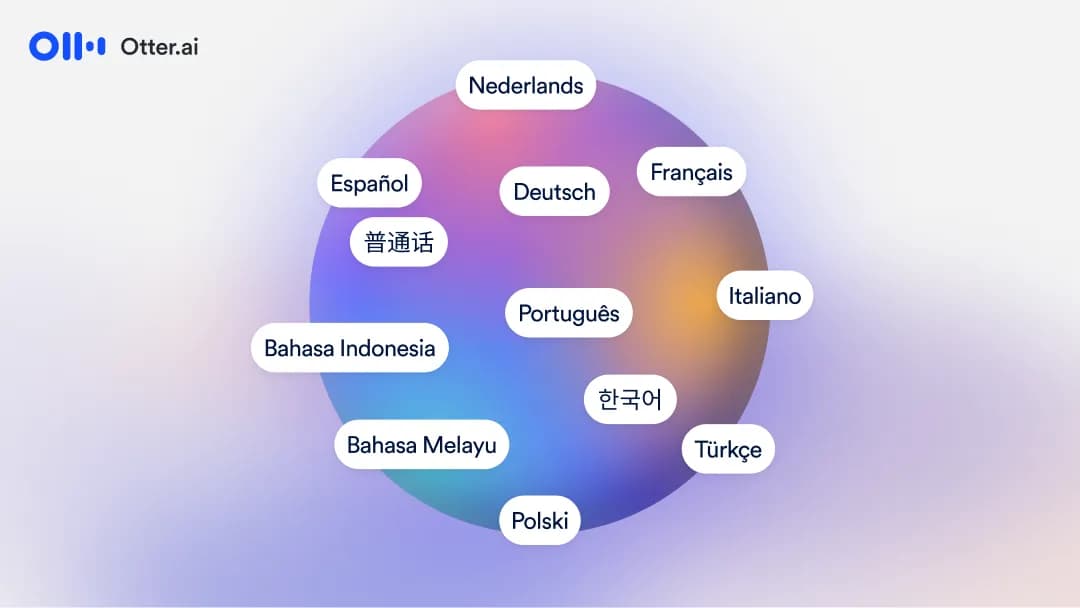
On November 10, 2026, Otter.ai announced the biggest multilingual expansion in its history. The official announcement, published on the company's blog, brings 27 new languages, 13 available today and 14 coming soon, plus a multilingual transcription feature that recognizes and transcribes conversations while participants switch languages, all within the same meeting.
Otter.ai launches biggest multilingual expansion in its history
Otter.ai announced 27 new languages and multilingual transcription that follows language switching within the same meeting. See what changes and how to test it.

Marcelo Santiago
Criador do bridgecode
The biggest AI newsletter in the World
Get AI articles in your inbox
Technical curation on models, agents and coding tools. No spam, unsubscribe anytime.
Before the announcement, Otter supported only four languages: English, French, Spanish and Japanese. With the expansion, the total reaches 31 languages when all are available.
In this article you will see:
- What are the 13 languages available now and the 14 coming soon
- How multilingual transcription works inside a meeting
- What this changes for international teams
- How to test the new feature today
- What Otter says about the models behind the expansion
The 13 languages available now
Beyond the four existing languages (English, French, Spanish and Japanese), Otter now supports 13 new languages:
- Mandarin (Simplified Chinese)
- German
- Italian
- Cantonese
- Korean
- Portuguese (Brazil)
- Russian
- Indonesian
- Malay
- Dutch
- Turkish
- Vietnamese
- Polish
The 14 languages coming soon are: Swedish, Danish, Finnish, Arabic, Hindi, Thai, Hebrew, Norwegian, Greek, Macedonian, Persian, Czech, Hungarian and Romanian.
Once all are available, Otter will support 31 languages in total.
Multilingual transcription inside the meeting
The most interesting feature of the announcement is not the language list, but the ability to follow conversations that change language in the middle of a meeting. According to Otter, multilingual transcription follows the conversation as it unfolds, transcribing accurately as participants switch to a supported language, with no need to change settings manually.
The example given by the company is a sales call that can go from English to Portuguese and then to Mandarin, and back, without anyone needing to pause to change a language setting.
Otter says the newly added languages run on the company's own speech models.
What changes for international teams
For teams working with participants in several countries, the expansion removes real friction. Before, a meeting with participants in different languages required choosing a main language for transcription or splitting the meeting into parts. Now, transcription can follow the conversation.
The same always-on agent movement shows up in tools like the Perplexity launches Teammates, always-on agent for work, which also seeks to remove friction from team workflows. Those working with voice and transcription can compare it with the Underdog launches 32 MB voice model in the browser, which tackles lightweight voice models running locally.
The company says the expansion was presented at Web Summit Lisboa and that the goal is to bring Otter's AI notetaker and conversational knowledge engine to new and existing teams around the world.
For sales, support and engineering teams that operate in global markets, the change is more than convenience. Multilingual transcription allows a single meeting to generate a complete, searchable record, even when participants switch between languages. This makes it easier to create a record system for voice communication decisions, cited by Otter itself as the central goal of the expansion.
The announcement also positions Otter in more direct competition with other transcription tools that already support multiple languages, but that generally require manual language setup per meeting. Otter's difference is the ability to track language switching without interruption, which reduces friction for teams that work in a hybrid and international way.
An Otter spokesperson told TechCrunch that "Otter is breaking down language barriers so that any company, no matter where it is based, can build a record system for voice communication decisions with AI."

Frequently asked questions about Otter.ai multilingual
How many languages does Otter support now?
17 languages today (4 existing plus 13 new), with 14 on the way, for a total of 31 languages once everything is available.
What is Otter's multilingual transcription?
It is the ability to follow conversations that switch languages within the same meeting, transcribing accurately without needing to change settings manually.
Is Brazilian Portuguese available?
Yes. Brazilian Portuguese is among the 13 new languages available now, along with Mandarin, German, Italian, Cantonese, Korean, Russian, Indonesian, Malay, Dutch, Turkish, Vietnamese and Polish.
Which platforms does Otter work on?
Web, iOS and Android apps, desktop app and Chrome extension.
Is the product free?
There is a free plan for basic use, with paid plans for those who need more features.
How to test the new feature today
The 13 languages are already available on the Otter platform. To test, just create an account (or use an existing one) and start a transcription in one of the new languages. The multilingual transcription functionality, which tracks language switching within the meeting, is listed as "coming soon".
Otter is available on the web, in iOS and Android apps, in a desktop app and in a Chrome extension. The product is free for basic use, with paid plans for those who need more features.
For teams that want to integrate Otter transcription with other systems, the company offers an API and webhooks to export transcripts and notes. This allows connecting the AI notetaker to existing workflows, such as CRM, documentation systems and project management tools.
Want to put Otter to work with other agents on the same project? Build an agent squad on bridgecode that works with you every day.
Source: Otter.ai
Tags:#radar#ia
Developer and creator of bridgecode, an agentic development environment for orchestrating squads of AI agents. Helps people going from vibe coding to professional development move from idea to shipped product.
Related articles

Newsletter
Automattic brings vibe coding apps together on a platform to publish to the web
Automattic brings vibe coding apps together on a platform to publish apps to the web. See how it works and what changes for teams that build with AI.
4 min
Newsletter
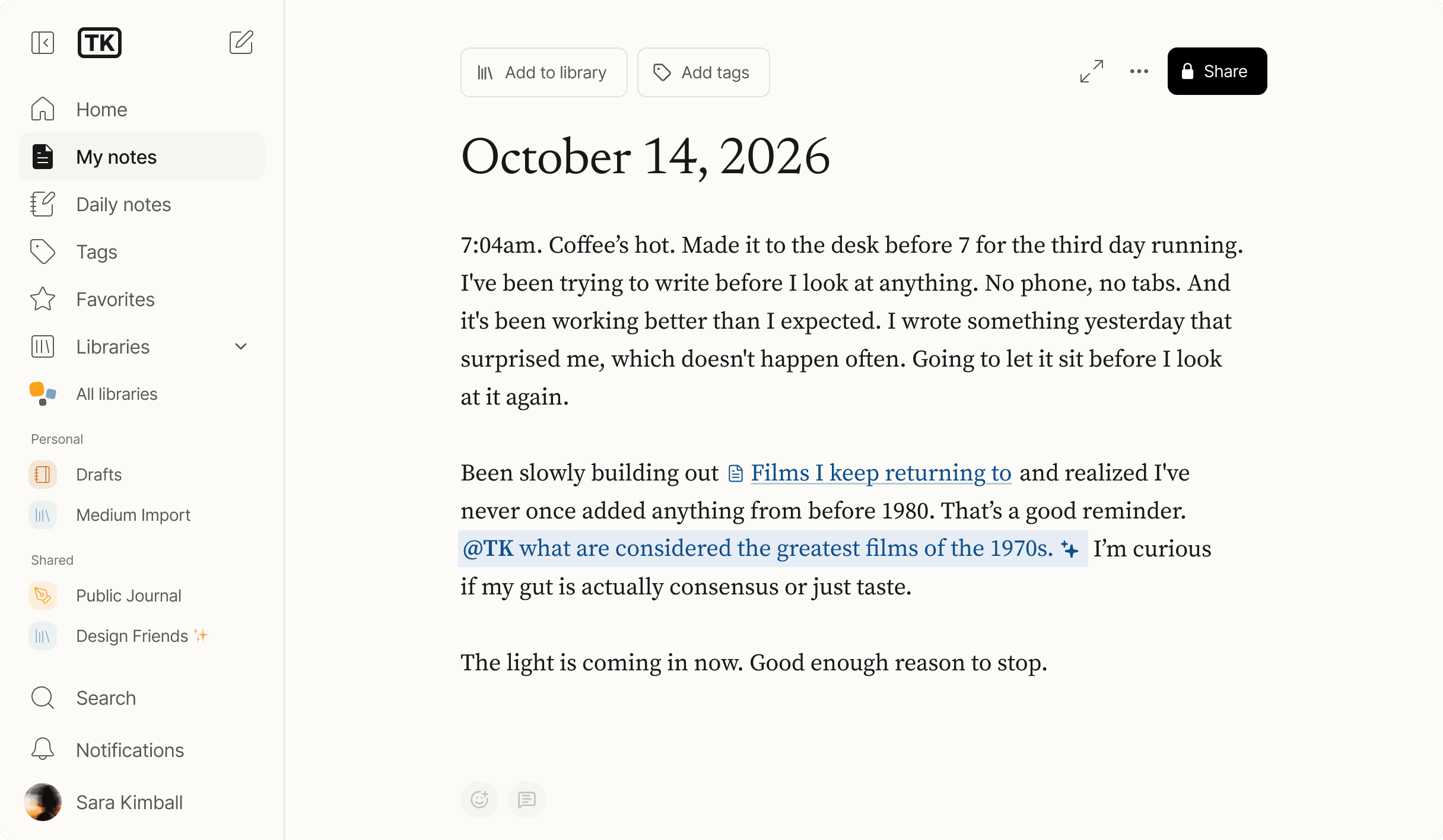
Medium launches TK, a notes app with AI in the editor
Medium launched TK, a notes and writing app with an AI assistant built into the editor. See how it works and what changes for writers.
6 min

Newsletter
Meta launches Muse Ember, a lightweight model for AI agents
Meta launched Muse Ember, the lightest and most cost efficient model in the Muse family, built for the repetitive tasks AI agents run all day. See the numbers and what changes.
6 min