
On November 9, 2026, Meta Superintelligence Lab announced Muse Ember, the lightest and most cost‑efficient model in the Muse family. The official release describes the model as built for complex reasoning execution and for the work agents repeat daily: tool calls, code subtasks, routing, extraction, and reading long documents.
Meta launches Muse Ember, a lightweight model for AI agents
Meta launched Muse Ember, the lightest and most cost efficient model in the Muse family, built for the repetitive tasks AI agents run all day. See the numbers and what changes.

Marcelo Santiago
Criador do bridgecode
The biggest AI newsletter in the World
Get AI articles in your inbox
Technical curation on models, agents and coding tools. No spam, unsubscribe anytime.
The highlight of the launch is cost per task. According to Meta, Muse Ember delivers more intelligence per dollar than Claude Haiku 5.5 or GPT‑6 Luna at any reasoning tier. It matches Haiku's top score at roughly one‑third the cost and beats every Luna tier. The model also sits on the efficiency frontier of the full Artificial Analysis leaderboard: no model scores higher for less per task.
In this article you will see:
- What Muse Ember is and what it was made for
- The performance numbers on Artificial Analysis
- How the model compares to Haiku 5.5 and GPT‑6 Luna
- How to test Muse Ember today
- What Meta says about safety and availability
What is Muse Ember
Muse Ember is the fourth model in the Muse family, following Spark (April), Glimmer (August), and Wonder (October). Meta positions it as the model for repetitive tasks at scale: where a heavy agent sets the rules, Ember applies those rules across tens of thousands of cases.
Readers following the Muse family can compare with Meta launches Spaces for the Muse agent, which covered Meta's personal agent.
The model has a 1‑million‑token context window and can generate up to 512 thousand output tokens. It natively understands text, images, audio, and video, allowing agents to read screenshots, charts, and scanned documents, or work from voice and video recordings without a separate model.
Meta states that Ember was the first model trained using Muse Wonder Full. The estimated cost is about $0.14 per task on Artificial Analysis, a figure low enough to run in every product, for everyone.
The numbers on Artificial Analysis
The table below summarizes the results published by Meta, comparing Muse Ember with Claude Haiku 5.5 and GPT‑6 Luna, all at the maximum reasoning tier:
- AutomationBench (end‑to‑end business flows): Ember 37.8 vs. Haiku 13.9 and Luna 20.2
- Agents' Last Exam (end‑to‑end agent tasks): Ember 61.6 vs. 57.0 and 57.1
- Personal Superintelligence Index (personal and knowledge work): Ember 46.8 vs. 36.1 and 37.0
- Terminal‑Bench 4.0 (agentic terminal coding): Ember 40.9 vs. 39.2 and 16.4
- Coding Agent Index (coding in real agent harnesses): Ember 46 vs. 37 and 31
- FrontierCode 2.0 (engineering tasks judged by mergeability): Ember 27.2 vs. Haiku 34.9 and Luna 25.2
- GDP.pdf (professional work on long documents): Ember 22.8, tying Luna at 22.8 and above Haiku at 20.8
- OSWorld 2.1 (desktop app computer use): Ember 69.5 partial vs. 68.9 and 50.5
- PerceptionBench (fine‑grained visual perception with tools): Ember 80.6 vs. 78.6 and 62.8
- Artificial Analysis Index: Ember 36, tying Haiku at 36 and above Luna at 28
FrontierCode is the only benchmark where Haiku outperforms Ember. In all others, Ember ties or wins.
Price and availability
Muse Ember is available today on the Meta Model API and in Muse Code, under the identifier muse-ember-1.0. Pricing is $0.10 per million input tokens, $0.004 per million cached input tokens, and $0.50 per million output tokens. The model also supports the Responses API.
Beyond Meta, Ember is available on Google Cloud and Oracle Cloud. Meta says it has even more efficient models in training.
What Meta says about safety
Before launch, Ember was evaluated under the Meta Superintelligence Scaling Framework, including chemical, biological, cybersecurity and loss of control risks. According to Meta, the model remained below high risk thresholds in all evaluated categories.
Meta also published a model safety evaluation, including how it behaves when acting on behalf of users: whether it respects user intent, handles sensitive information appropriately, resists hidden instructions in web pages, documents or tool outputs, and asks for human intervention before high impact actions.
Those comparing execution models can cross-reference with Claude Fable 5.2 and Mythos 5.2: Anthropic launches faster and cheaper models, which covers Anthropic's strategy of faster and cheaper models for repetitive tasks.
Frequently asked questions about Meta's Muse Ember
What is Muse Ember?
It is the lightest and most cost efficient model in Meta's Muse family, built for repetitive tasks AI agents perform all day, such as tool calls, code subtasks, routing, extraction and reading long documents.
How much does Muse Ember cost?
$0.10 per million input tokens, $0.004 per million cached input tokens and $0.50 per million output tokens.
How does Muse Ember compare to Haiku and Luna?
It ties the best score of Claude Haiku 5.5 at about one third of the cost and outperforms all tiers of GPT-6 Luna on most Artificial Analysis benchmarks. FrontierCode 2.0 is the only benchmark where Haiku beats Ember.
Does Muse Ember support images and audio?
Yes. The model natively understands text, images, audio and video, allowing agents to read screenshots, charts and scanned documents without needing a separate model.
Where can I test Muse Ember?
On Meta Model API, Muse Code, Google Cloud and Oracle Cloud, using the identifier muse-ember-1.0.
How to test Muse Ember today
To get started, create an API key in Meta Model API and call the model with identifier muse-ember-1.0. Meta published a quick start guide and a cookbook with examples, including one that organizes 10 thousand photos using subagents.
For those already using the OpenAI API, migration is simple: just point the client to https://api.meta.ai/v1 and use the Meta key.
A use case suggested by Meta is a customer support agent: a heavier model sets the service rules, and Ember applies those rules to tens of thousands of cases, reading screenshots and documents along the way.
Want to put Muse Ember to work with other agents on the same project? Build an agent squad on bridgecode that works with you every day.
Source: Meta
Tags:#radar#ia
Developer and creator of bridgecode, an agentic development environment for orchestrating squads of AI agents. Helps people going from vibe coding to professional development move from idea to shipped product.
Related articles

Newsletter
Automattic brings vibe coding apps together on a platform to publish to the web
Automattic brings vibe coding apps together on a platform to publish apps to the web. See how it works and what changes for teams that build with AI.
4 min
Newsletter
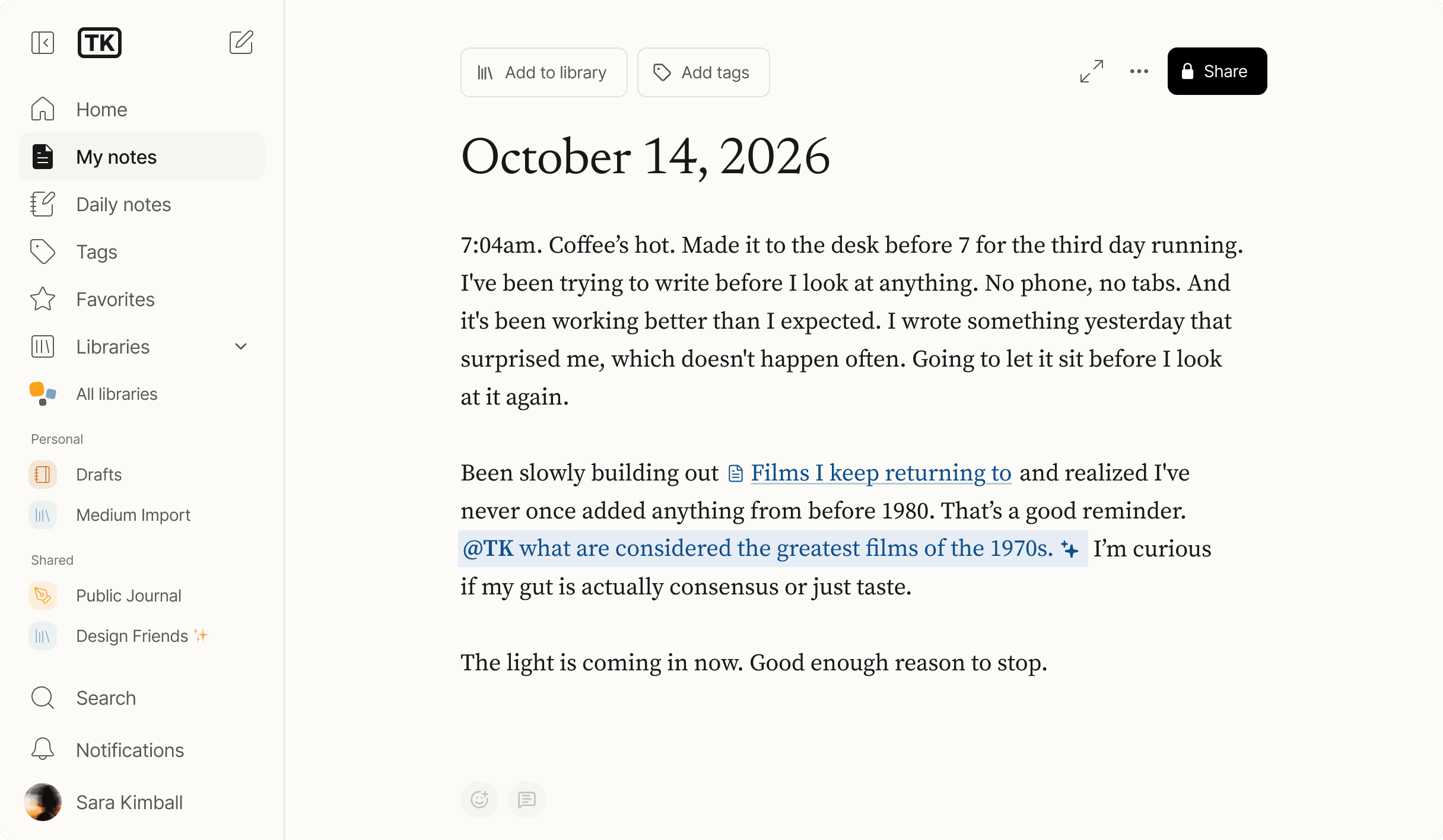
Medium launches TK, a notes app with AI in the editor
Medium launched TK, a notes and writing app with an AI assistant built into the editor. See how it works and what changes for writers.
6 min
Newsletter
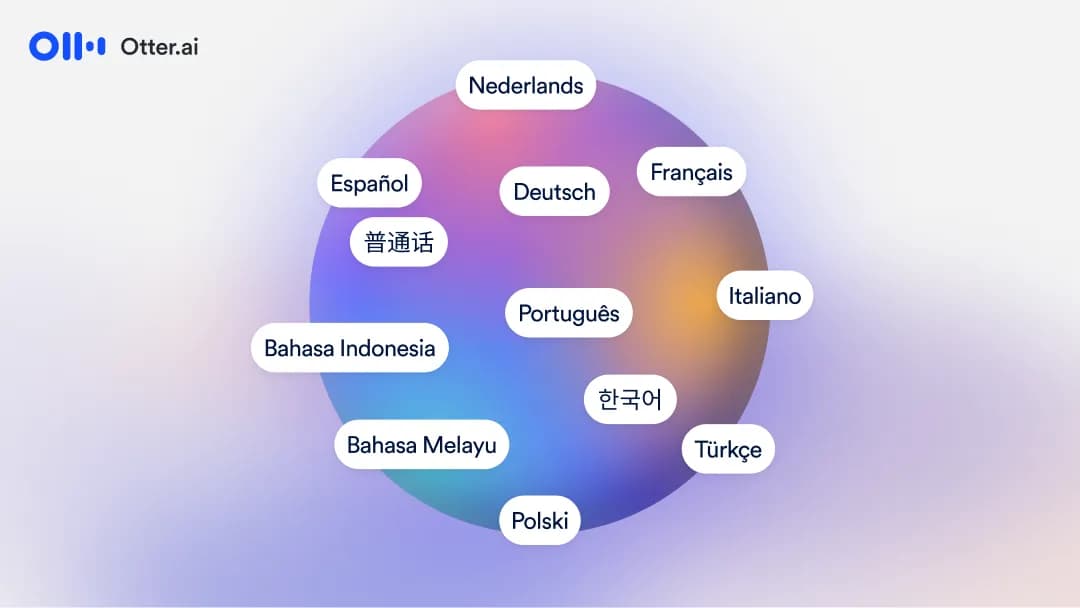
Otter.ai launches biggest multilingual expansion in its history
Otter.ai announced 27 new languages and multilingual transcription that follows language switching within the same meeting. See what changes and how to test it.
6 min