
Anthropic detailed on October 23, 2026 the security and privacy protections for Claude Duet, an agent that operates connected services in a research preview. The official account published the article at 5:55pm Brasília time on the Anthropic post on X.

Claude Duet: Anthropic details security and privacy
Anthropic explained how Claude Duet combines approvals, external checks beyond the model and isolated credentials before acting on connected services.

Marcelo Santiago
Criador do bridgecode
The biggest AI newsletter in the World
Get AI articles in your inbox
Technical curation on models, agents and coding tools. No spam, unsubscribe anytime.
The company organizes the design around three principles: discretion with shared data, user control and credentials out of the agent's reach.
In this article you will see:
- The protection layers of Claude Duet
- How human approval and separate checking work
- Why passwords and tokens stay out of the agent's reach
- What the research preview still does not guarantee
The Claude Duet combines two layers and three principles
Anthropic describes two layers: safety training in the model and product safeguards. The article explains the new controls for tasks done in connected accounts and services.
Claude Duet can keep working even when the user closes the app. Anthropic identifies it as a research preview, not general availability.
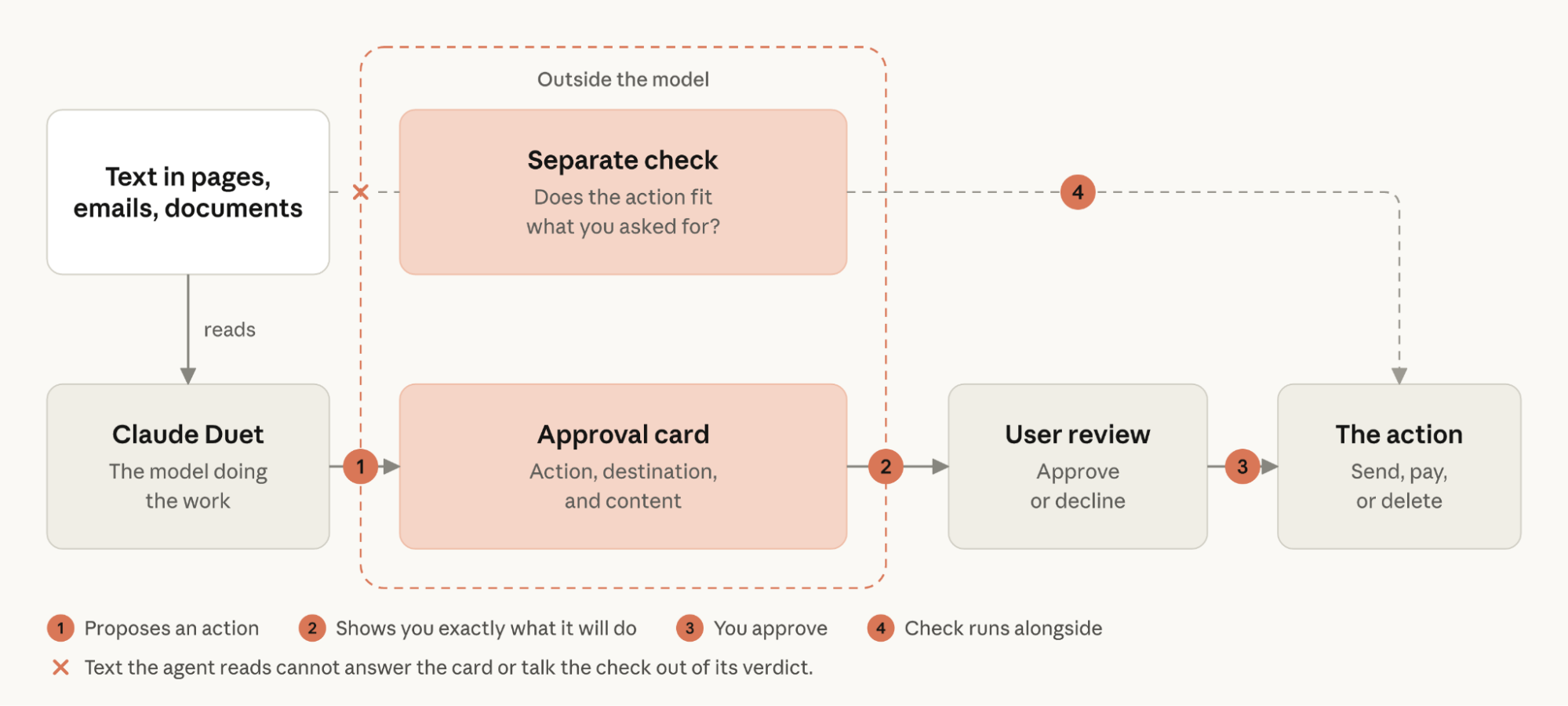
Claude Duet asks for approval before sensitive actions
Before sending a message, paying or deleting something, the agent shows the action, the destination and the content, including the recipients. The user approves or rejects before execution.
A separate automated check evaluates whether the action matches the request. It runs outside the model that executes the task, so that hidden instructions on a page do not change this verification.
Credit and source: Anthropic.
Anthropic keeps credentials out of Claude Duet
The company says the agent does not see passwords, browser cookies, login tokens or other credentials. This isolation follows the principle of separating secrets from the part of the system that does the work.
The article also describes a classifier that checks drafted messages before sending. For context on controls in agents, see how Claude Code fixed sandbox rules and how 1Password protects logins used by agents.
Claude Duet remains in research preview
Anthropic presents Claude Duet as an agent that can read information in connected services and execute tasks while the user is away. Sensitive actions, however, go through review before being completed.
The article describes controls designed to reduce risks, not a guarantee that every action will be safe. The company also says it continues working on product protections.
Frequently asked questions about Claude Duet
What is Claude Duet?
It is a research preview agent that can use connected services and keep working while the person is away, according to Anthropic.
Can Claude Duet send messages without authorization?
For sensitive actions described by Anthropic, no. The agent shows the action, destination and content and waits for the person's approval.
Can Claude Duet see passwords or login tokens?
No. Anthropic states that the agent has no access to passwords, browser cookies, login tokens or other credentials.
Is Claude Duet already available to everyone?
Anthropic's page describes it as a research preview and does not announce general availability.
Controls outside the model help keep the user in command
Claude Duet combines explicit approval, a separate check and credential isolation. For those building agents, the key point is to keep these barriers outside the model that executes the task.
From draft to finished product: split the work between specialist agents and track each step on bridgecode.
Source: Anthropic
Tags:#Anthropic#Claude Duet#segurança de agentes#privacidade
Developer and creator of bridgecode, an agentic development environment for orchestrating squads of AI agents. Helps people going from vibe coding to professional development move from idea to shipped product.
Related articles
Newsletter
Arete-27B: Nous retrains Qwen for Western values
Arete-27B is a fine-tune of Qwen3.8-27B by Nous Research to reduce political biases, with factuality rising from 2.32 to 2.98 and propaganda dropping from 22% to 0.9%.
6 min
Newsletter
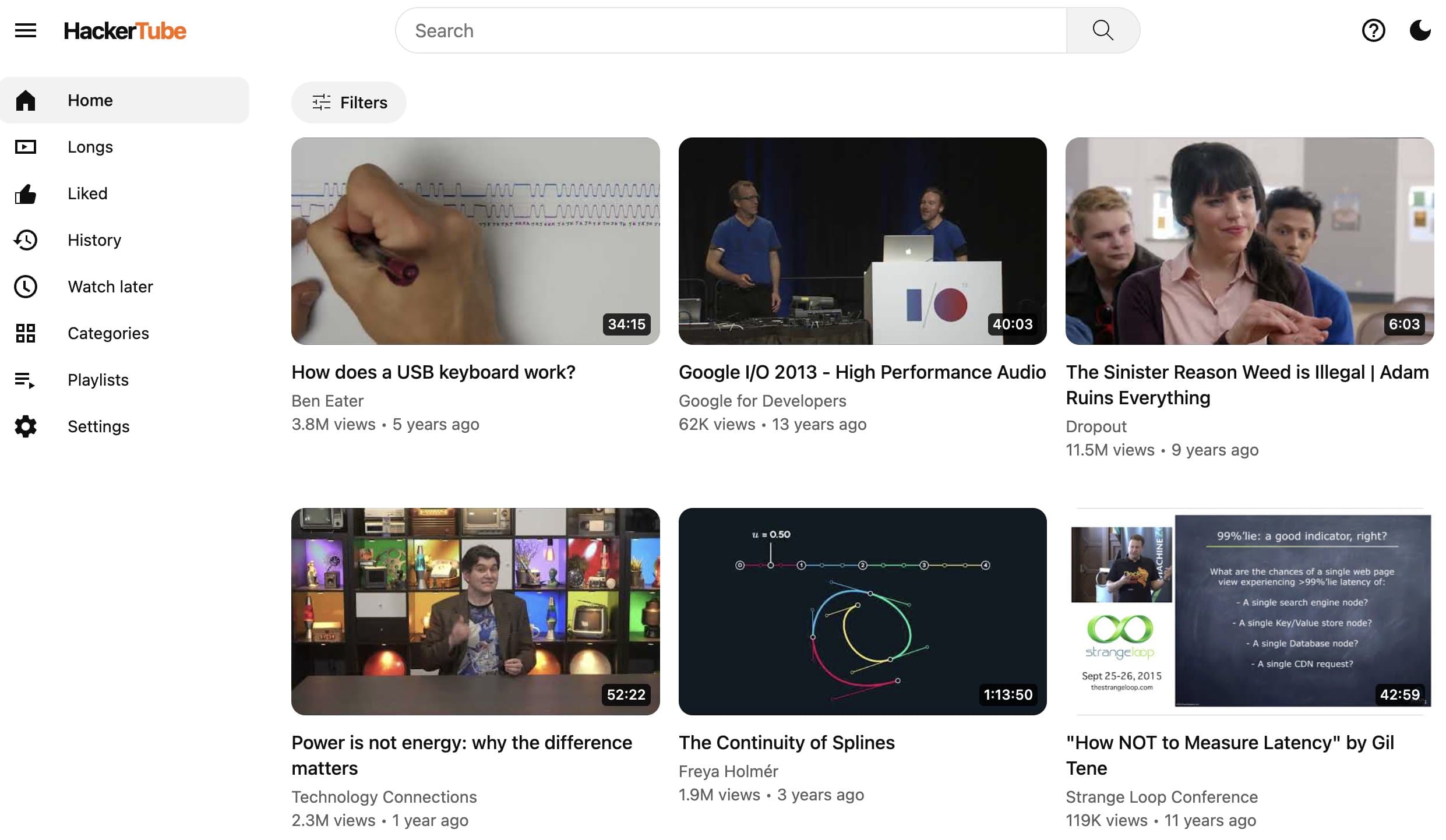
Karpathy builds a video platform over a weekend with Claude
Andrej Karpathy built HackerTube in a weekend with Claude. What it says about development speed with coding agents.
5 min
Newsletter
Rich Sutton reinforces that compute alone does not create intelligence
Turing Award winner Rich Sutton reinforces that raw compute is not enough for intelligence and calls for new methods, continuous learning and world models.
5 min