
Artificial Analysis published a personality analysis of GPT-6.2 Astra and GPT-6.2 Sol on November 19, 2026, models released by OpenAI on November 17. Both models respond in a much shorter way, use less formatting, and admit less uncertainty than previous versions.

Benchmarks5 min
GPT-6.2 Astra and Sol: responses 40% shorter on PersonalityBench
Artificial Analysis measured the personality of GPT-6.2 Astra and Sol: responses up to 40% shorter, less formatting, and less admission of uncertainty.
The biggest AI newsletter in the World
Get AI articles in your inbox
Technical curation on models, agents and coding tools. No spam, unsubscribe anytime.
This data matters for anyone using the models in agents, support chat, or text generation. Response style changes reading time, the risk of accepting a guess as fact, and how you write prompts.
In this article you will see:
- What the AA-PersonalityBench is and what it does not measure
- The size, formatting, and transparency numbers for Astra and Sol
- What changed at higher effort
- How to adjust your prompts for this new personality
What is the Artificial Analysis AA-PersonalityBench
The AA-PersonalityBench measures how AI models communicate, not whether they are correct. The benchmark's own page warns that it is not a capability test: the scores describe how the model tends to write and respond.
There are 30 personality traits, judged in pairs. A panel of LLMs compares two responses to the same prompt and chooses the one that shows more of the trait, whether desirable or not.
The verdicts become an Elo score per trait, starting from 30 prompts written for each (900 total). The 30 traits group into 8 indices: Expressiveness, Organization, Informativeness, Transparency, Warmth, Conviction, Imagination, and Slop.
Beyond the judged traits, the benchmark measures 21 characteristics directly from the responses, such as size, structure, punctuation, and emphasis. Each index is a percentile from 1 to 100 across all evaluated models. The full methodology is on the Artificial Analysis methodology page.
GPT-6.2 Astra and Sol respond with fewer words and fewer headings
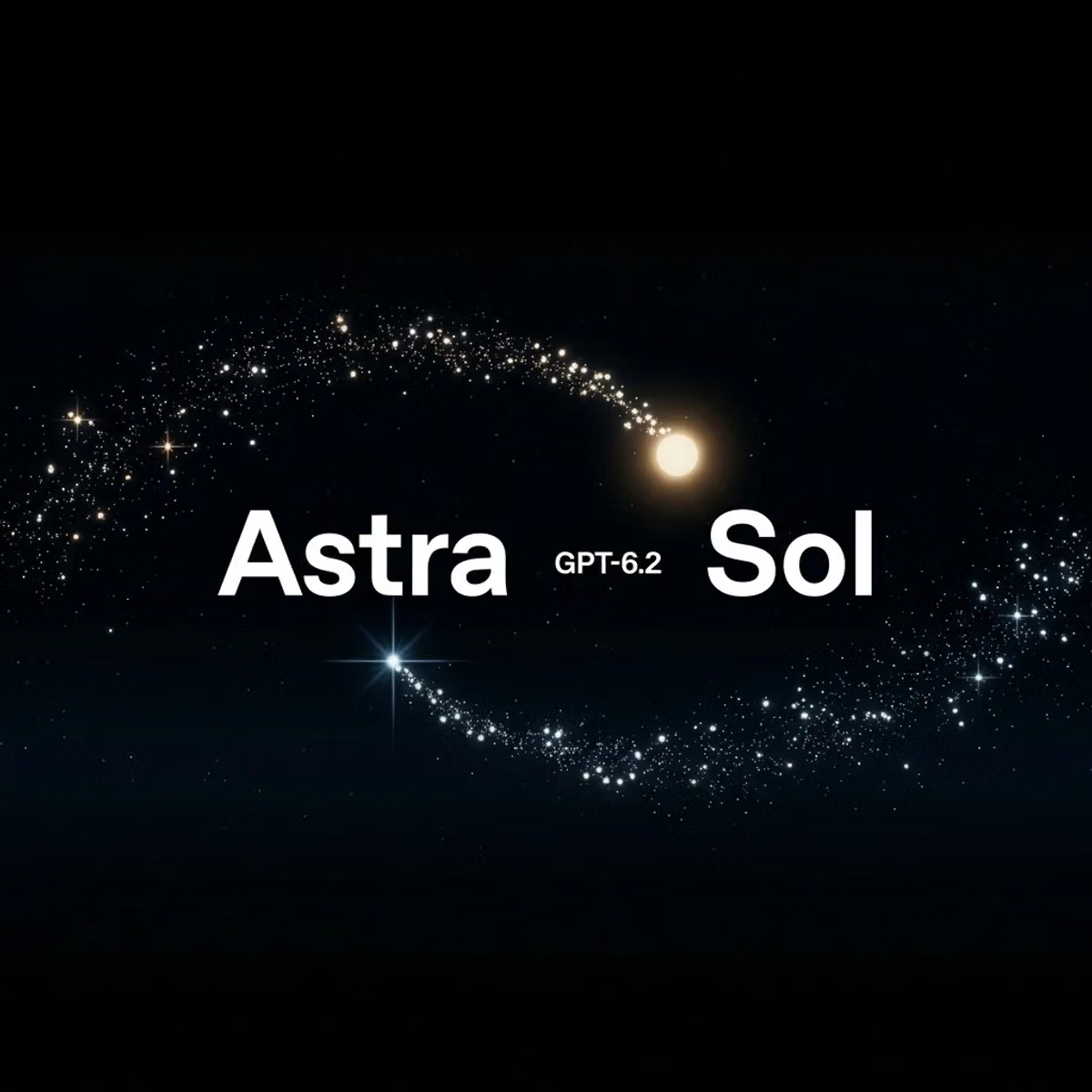
The most visible change is size. Astra went from 352 to 210 words per response, a 40% drop. Sol went from 337 to 223 words, a 34% drop.
Formatting also shrank. According to the analysis, heading usage per response in Astra fell from 1.99 to 0.11, and in Sol from 1.85 to 0.25.
The em dash followed the same path: in Astra it went from 3.19 to 0.70 per response, and in Sol from 3.01 to 0.51.
In the Organization index, the Answer First trait rose from 49 to 89 in Astra and from 64 to 87 in Sol. In other words, both go straight to the answer before explaining.
In the Expressiveness index, the Natural Sounding trait rose from 58 to 100 in Astra and from 54 to 79 in Sol. For running text, this indicates less mechanical prose.
Less admitted uncertainty: the GPT-6.2 watch point
The most delicate shift is in the Transparency index. In the Admits Uncertainty trait, Astra fell from 96 to 24 and Sol from 98 to 51.
In simple terms, the models hesitate less and say "I'm not sure" less often. The benchmark does not claim this worsens accuracy, but the tone becomes more confident.
This point aligns with another Artificial Analysis data point on the same models. In AA-Omniscience, the hallucination rate (guessing when not knowing the answer) is 59% in Astra and 55% in Sol at maximum effort, as detailed in our post on GPT-6.2 Astra in the Intelligence Index.
Short, confident responses demand more care in review. A direct text with a wrong fact is easier to accept than a text full of caveats.
What changes at higher effort: Evidence-Based and Disclaims Assumptions
The analysis also compares effort levels. From low to maximum effort, Astra rose from 12 to 54 in Evidence-Based and from 20 to 52 in Disclaims Assumptions.
Sol saw larger gains: Evidence-Based from 16 to 68 and Disclaims Assumptions from 26 to 77.
This suggests that when you ask for more reasoning, models go back to grounding answers in evidence and making assumptions explicit. For tasks where errors are costly, maximum effort is worth it.
For the full Sol pricing and performance sheet, see the post on GPT-6.2 Sol in the Intelligence Index. Other comparative tests are in the benchmarks category.
Measurement limits and how to test today
PersonalityBench uses LLM judges, and the methodology itself states that scores are percentiles among evaluated models. Percentile shows relative position, not absolute quality.
The numbers here come from Artificial Analysis's announcement on X and its benchmark page. The full analysis report was not accessible for direct consultation at the time of publication.
To feel the difference, run the same prompt on GPT-6.2 Astra and Sol and compare length, structure, and hesitation level. Add instructions to the prompt such as "list your assumptions" and "state your confidence level."
If your application depends on long, structured responses, ask for that explicitly. The new default tends to be short and without headings, so reports and documentation need format instructions.
Frequently asked questions about the personality of GPT-6.2
What does AA-PersonalityBench measure?
It measures how a model communicates, not whether it gets things right. There are 30 personality traits judged in pairs by a panel of LLMs, plus 21 characteristics measured directly in responses, such as length, structure, and punctuation, according to Artificial Analysis.
How much shorter did GPT-6.2 responses get?
Astra dropped from 352 to 210 words per response, 40% less. Sol dropped from 337 to 223 words, 34% less, according to Artificial Analysis.
Does GPT-6.2 admit less uncertainty?
Yes. On the Admits Uncertainty trait, Astra fell from 96 to 24 and Sol from 98 to 51. This shows a more confident tone, not necessarily more accuracy.
Does the benchmark say whether GPT-6.2 is better or worse?
No. Artificial Analysis itself states that PersonalityBench is not a capability test. It describes response style, and technical quality appears in other benchmarks.
How to handle shorter, more confident responses?
Ask for sources, assumptions, and confidence level in the prompt, and validate results with tests. At higher effort, Astra and Sol improved on Evidence-Based and Disclaims Assumptions.
What GPT-6.2's shorter responses change for AI users
GPT-6.2 became more direct, more natural, and more confident. This reduces reading time and saves output tokens, but increases the importance of validating facts before acting.
Adjust prompts to ask for sources, assumptions, and confidence, and use automated tests when the response becomes code. The style has changed, and your review process needs to keep up.
Stop switching between ten AI tools. Coordinate your agents in a single flow on bridgecode.
Source: Artificial Analysis
Tags:#GPT-6.2#OpenAI#Artificial Analysis#AA-PersonalityBench#benchmark

Developer and creator of bridgecode, an agentic development environment for orchestrating squads of AI agents. Helps people going from vibe coding to professional development move from idea to shipped product.
Related articles
Benchmarks
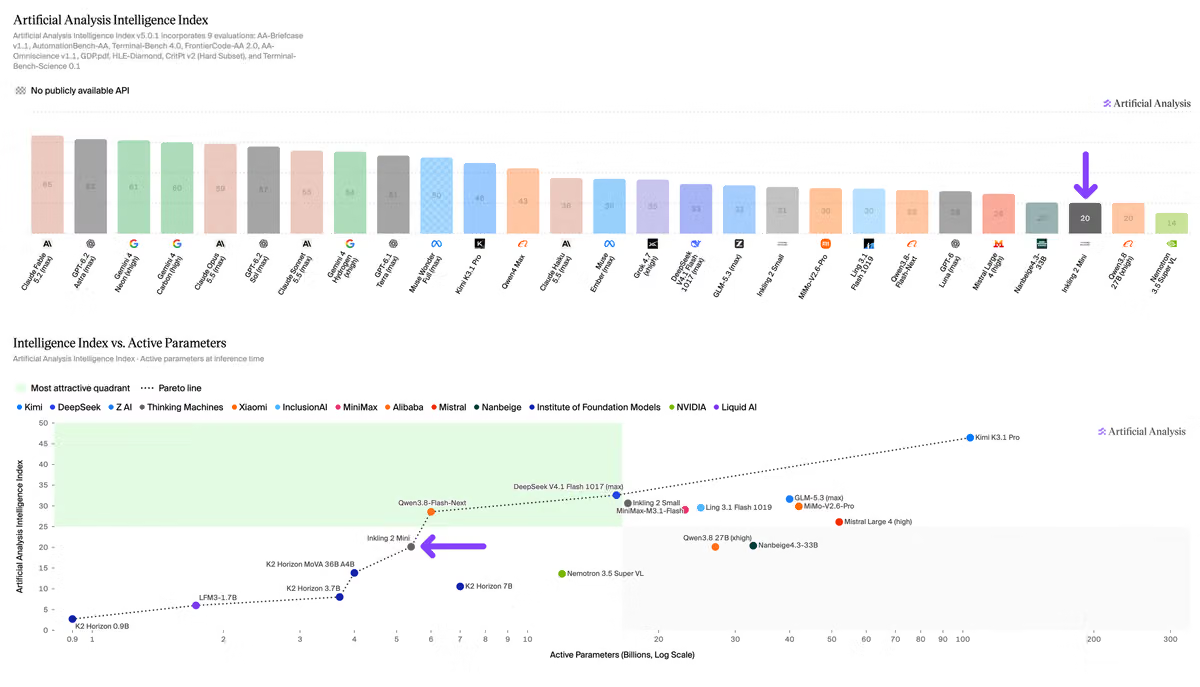
Inkling 2 Mini scores 20 on Intelligence Index with 5.4B active parameters
Artificial Analysis measured the Inkling 2 Mini, an open model from Thinking Machines: 20 on the Intelligence Index, 5.4B active parameters, and a per-task cost six times lower than Qwen3.8 27B.
5 min
Benchmarks
Gemini 4 Neon: 61 points on the Intelligence Index, lower cost
Gemini 4 Neon scores 61 on the Intelligence Index, ranks 3rd and costs about 17% less per task than Gemini 4 Carbon, according to Artificial Analysis.
5 min
Benchmarks
Endpoint Accuracy Index v1.1: 24 of 103 endpoints fall below the self-hosted reference
Artificial Analysis launches the Endpoint Accuracy Index v1.1: 24 of 103 serverless endpoints score below the self-hosted reference.
6 min