
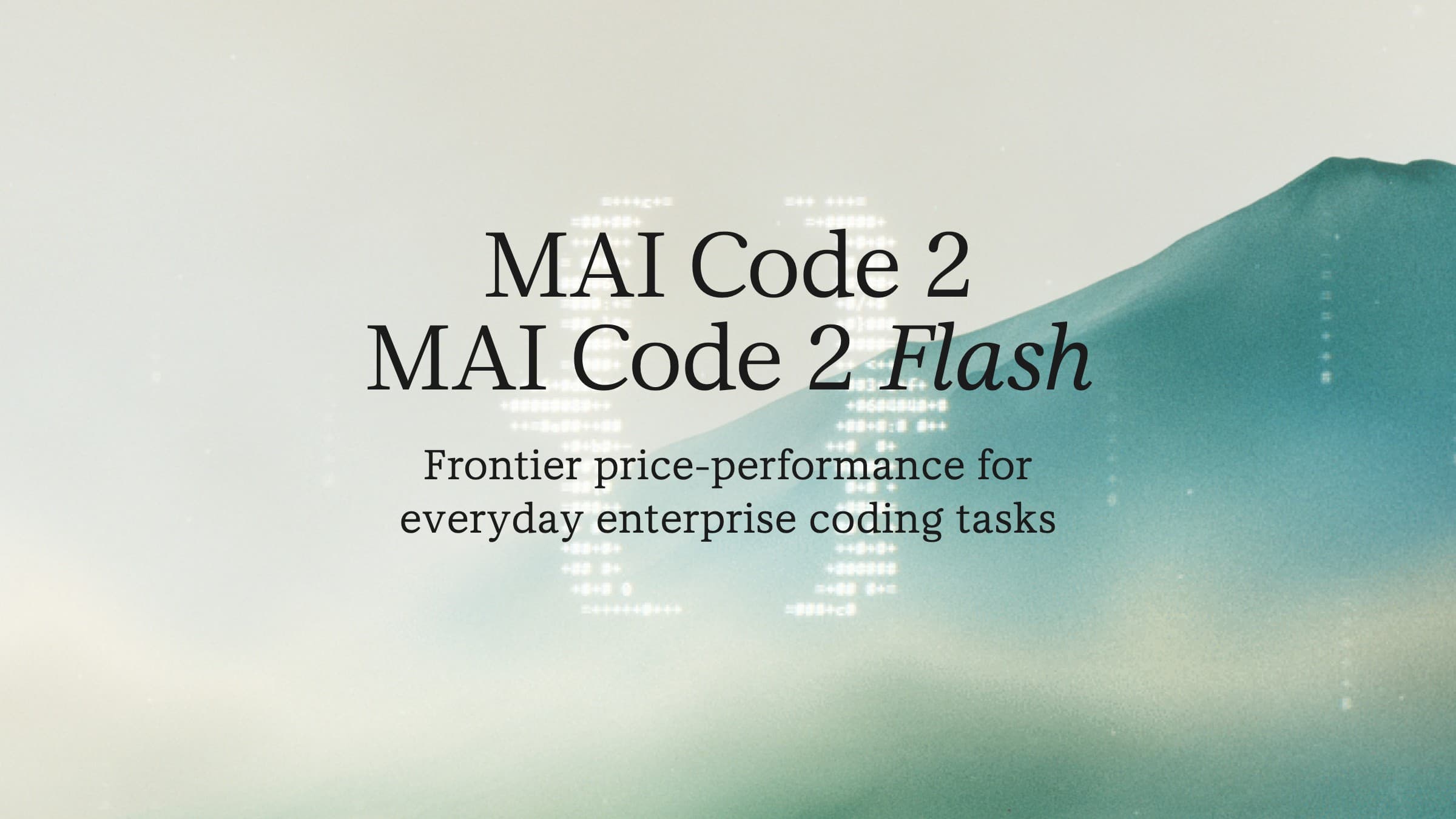
Microsoft AI announced MAI Code 2 and MAI Code 2 Flash on November 17, 2026, two code models that promise near-frontier quality at a fraction of the cost. The same day, GitHub added both to Copilot. For anyone using code agents daily, the key factor is the token bill.
Newsletter5 min
MAI Code 2 arrives in Copilot with a cost focus
Microsoft AI has launched MAI Code 2 and MAI Code 2 Flash, cost-focused code models, now available in GitHub Copilot for annual plans.
The biggest AI newsletter in the World
Get AI articles in your inbox
Technical curation on models, agents and coding tools. No spam, unsubscribe anytime.
The announcement came alongside the seven-model package the company unveiled at Ignite 2026. It's worth separating what Microsoft AI claims from what third parties have confirmed: the numbers below are from the company itself, with no independent measurement.
In this article you'll see:
- What MAI Code 2 and MAI Code 2 Flash are
- The cost and quality numbers Microsoft AI released
- How the models reach GitHub Copilot
- Declared limits and how to test today
What is MAI Code 2, Microsoft AI's new code model
MAI Code 2 is a language model focused on programming, from Microsoft AI's MAI Code family. According to the official model page, it targets the best cost-to-performance ratio for everyday enterprise engineering tasks and stands out in taking code to production.
MAI Code 2 Flash is the lightweight version. The company describes it as ideal for high-volume simple work: explaining code, making targeted edits, applying routine fixes, and iterating fast, with quality at a much lower cost.
GitHub summarizes the family in its changelog as the evolution from lightweight code assistance to complex agentic software engineering. Agentic, here, means the model executes steps on its own, such as editing files and running commands, not just suggesting snippets.
MAI Code 2 numbers: 98% of quality for about 40% of the price
In the Ignite 2026 post, Microsoft AI claims MAI Code 2 achieves 98% of GPT-6.1 Sol's code quality for about 40% of the price. Against Opus 5.5, it says it reaches 96% of performance for only 5% of the price.
On the model page, the company reproduces customer testimonials. A 5G carrier states that a customized version of Code 2 Flash outperforms GPT-6.1 Sol in standard network analysis, at 50 times lower cost.
Another testimonial comes from Woven by Toyota, which fine-tuned Flash with its history of MISRA pattern fixes, used in automotive embedded software. According to the report, the model delivered merge-ready fixes in 44% of cases where production frontier models required human rework, at less than one-tenth the cost.
These are customer reports published by the vendor, not a public benchmark. Treat them as directional indication, not reproducible results.
MAI Code 2 and MAI Code 2 Flash in GitHub Copilot
The GitHub changelog states that both models are available to eligible annual plan subscribers and are billed per use. They appear in the model selector for Copilot's cloud agent and GitHub Mobile, on iOS and Android.
For teams, Business and Enterprise plan admins control access via the model policy in Copilot settings. By default, new models are enabled automatically unless the admin has turned off the global default or blocked the model.
Copilot has been expanding its model catalog. We've already covered the arrival of GPT 6.1 Terra in GitHub Copilot and the orchestration layer described in Microsoft brings Copilot harness to Foundry. MAI Code 2 joins that same movement: more options in the selector, depending on the task.
Microsoft AI is also competing on other fronts. In October, MAI Image 2.7 topped image editing rankings, according to the company and the cited rankings.
What Microsoft AI Says MAI Code 2 Doesn't Do
The company is direct about the limits. The models were built to prioritize the coding work customers do every day. According to the Ignite post, they explicitly haven't been tuned yet for harder problems like fundamental scientific research and very long-horizon agentic work.
This changes how you choose. A cheap, fast model works well for review, small fixes, and repetitive tasks. For a weeks-long refactor or an agent that runs for hours unsupervised, public data is still lacking.
Another point of attention: the announcement doesn't include an open benchmark table with method, sample, and competitor versions. Without that, the 98% and 96% figures depend on Microsoft AI's internal methodology.
How to Test MAI Code 2 Today
If you have Copilot on an eligible annual plan, open the model selector and look for MAI Code 2 or MAI Code 2 Flash. Availability may vary by account and plan, so check the changelog if it doesn't appear.
A simple, honest test: pick five to ten real tasks from your repository, such as lint fixes, small tests, and module explanations. Run them on Flash, then on the model you already use, and compare time, first-pass success rate, and rework.
Track cost per completed task, not just per token. A cheaper model that needs two rounds of fixes can end up more expensive overall.
Frequently asked questions about Microsoft's MAI Code 2
What is MAI Code 2?
It is a code model from Microsoft AI launched on November 17, 2026. The company describes it as a frontier model in cost and performance for everyday engineering tasks in enterprises.
What is the difference between MAI Code 2 and MAI Code 2 Flash?
Flash is the version designed for high volume and quick tasks, such as explaining code, making targeted edits, and routine fixes. MAI Code 2 is the general-purpose version, suited for deep debugging, multi-file changes, and refactoring.
Is MAI Code 2 in GitHub Copilot?
Yes. GitHub announced on November 17 that both models are in the model selector for eligible annual plan subscribers, with usage-based billing.
Have the performance numbers been verified by third parties?
No independent verification is cited in the announcement. The comparisons with GPT-6.1 Sol and Opus 5.5 are from Microsoft AI itself.
Is MAI Code 2 suitable for any programming task?
No. Microsoft AI says the models prioritize daily coding work and have not yet been tuned for harder problems, such as fundamental scientific research and agentic tasks with very long horizons.
What Changes for Those Coding with AI Agents
The trend is clear: the competition is no longer just about who has the strongest model, but which model solves each step at the lowest cost. A squad can use a frontier model for planning and an economical model for volume tasks.
To make this work, it's worth measuring with your own projects before switching anything. Microsoft AI's numbers are a good reason to test, not a reason to trust without measuring.
You define the goal and the agents divide the tasks: one plans, another executes, another reviews. See how orchestration works in bridgecode.
Source: Microsoft AI
Tags:#radar#ia

Developer and creator of bridgecode, an agentic development environment for orchestrating squads of AI agents. Helps people going from vibe coding to professional development move from idea to shipped product.
Related articles
Newsletter
Antigravity launches Orchestrator: Carbon and Hydrogen together
Google Antigravity adds Orchestrator: a mode that switches between Gemini 4 Carbon and Hydrogen in the same session to reduce quota usage and execution time.
5 min

Newsletter
Z.ai's GLM-5.4 Uses Loop Transformer, Targets General-Purpose Code
Z.ai announced GLM-5.4, its first flagship with a 750B Loop Transformer, up to 200 tokens/s, and a focus on general-purpose code. API and weights not yet released.
5 min
Newsletter
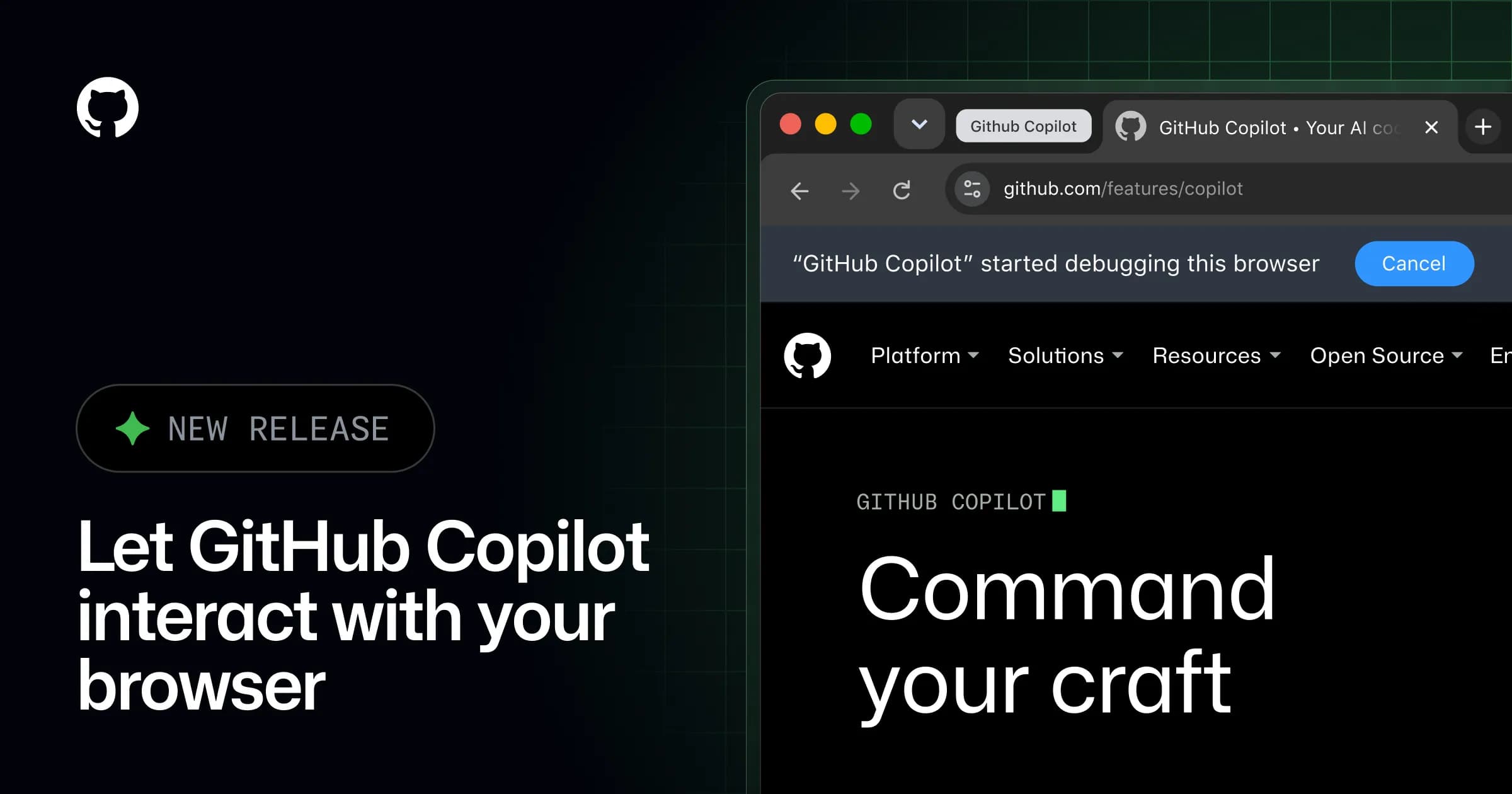
GitHub Copilot uses browser in preview with Chrome extension
GitHub Copilot now has browser use in public preview as of 17/11/2026, with a Chrome extension, in the CLI, app, VS Code and JetBrains.
5 min