
Google announced on October 30, 2026, at 5pm UTC](https://blog.google/innovation-and-ai/models-and-research/google-research/project-suncatcher-satellite-response/) that it received the first artificial intelligence response generated by a data center class TPU in orbit. The milestone came from the Project Suncatcher prototype, research on AI computing in space, and not from a service available to developers.

Google receives first AI response from a satellite
Google confirmed the first AI response from a TPU in orbit. Project Suncatcher remains in testing and does not offer a public API.

Marcelo Santiago
Criador do bridgecode
The biggest AI newsletter in the World
Get AI articles in your inbox
Technical curation on models, agents and coding tools. No spam, unsubscribe anytime.
In this article you will see:
- What the first Project Suncatcher response proves
- How Gemma 4 and a TPU took part in the test
- What still needs to be verified in orbit
- How to follow the project without confusing it with a public API
The first Project Suncatcher response came from a TPU in orbit
Google's publication describes the result as an initial "Hello World" milestone: an AI response produced by a TPU chip installed on the prototype satellite. TPU is the acronym for Tensor Processing Unit, an accelerator developed by Google to run machine learning workloads.
The relevant point is that the processing occurred on the equipment in orbit, and not just on a ground server that sent a response via satellite. The announcement, however, does not present a benchmark for speed, energy consumption or cost. Therefore, the demonstration confirms an execution, but does not measure the viability of operating a space data center at scale.
Project Suncatcher is long term research on this possibility. In the launch announcement, Google described the prototype as the first step of a study on AI computing in space. The company built the satellite in partnership with Planet and placed it in orbit on October 1, 2026. The previous presentation of the prototype and the launch helps separate this research from a commercial product.

Gemma 4 received the first prompt during the pass over Svalbard
Google says it sent the first prompt to the open model Gemma 4 onboard the satellite during a communication pass with a ground station. The request was to write a haiku about being in space. When the satellite passed over Svalbard, Norway, the team received the text back via the data link.
The flow has two important steps. First, the team sends a request to the equipment in orbit, an operation called uplink. Then, the satellite transmits the response back to Earth, the downlink. The demonstration shows that this cycle was able to carry a request, run the model and return a textual output.
This is different from saying the model was connected to the internet or that anyone can send prompts. The post does not announce a public interface, an API, an SDK or an access program to the satellite. What exists is a controlled test released by the project team itself.
The response was a short haiku, not a comprehensive evaluation of reasoning or quality. Google also says that, after this first result, it experimented with limericks about space and telemetry prompts to check the technical status of the onboard systems. It did not publish comparable metrics for latency, accuracy or availability.
Google will still evaluate heat and radiation before expanding the test
The next step, according to the publication, is to test how TPUs behave under thermal stress and radiation exposure. These factors are part of the orbital environment and can affect the operation of electronic components. The announcement does not report results from these tests, so it is still not possible to conclude how the hardware will behave over a prolonged operation.
The first result was obtained after a few weeks of commissioning. The team reports having powered the host computer and the TPU trays and run initial machine learning tests. This context matters because a one off demonstration does not replace validation of reliability, communication, power consumption and maintenance.
Google points to as the next milestone a pair of interconnected satellites in 2027. The publication does not present a specific date nor say that this stage is already completed. The idea of connecting two pieces of equipment makes communication between satellites part of the experiment, but details of capacity and performance remain open.
To compare the announcement with other company initiatives aimed at developers, see also the Google Connected Apps platform to integrate services into Search and Gemini. It is another type of project: there the focus is software integration; in Suncatcher, it is testing physical computing off Earth.
How to test today: Project Suncatcher
Today, the public way to follow the test is the Google research publication and the official video embedded below. The material shows team members explaining the project and reacting to the response produced by the model. It does not offer access to the satellite nor instructions to run the same experiment in a local environment.
For those who work with infrastructure, the immediate value is to observe which questions Google decided to test and which data has not yet been published. The company did not release an open telemetry dashboard, a hardware specifications list or a benchmark result that would allow reproducing the experience in another environment.
The news also does not change the deployment options for Gemma 4 for conventional applications. The test described uses an embedded model in an experimental prototype. Anyone who intends to create a software integration with Google products can consult the Gemini enterprise search in Google Distributed Cloud, which deals with on premises deployment in an enterprise infrastructure, not orbital computing.
Frequently asked questions about Google's Project Suncatcher
What is Project Suncatcher?
It is a long-term Google research effort to test AI computing in space with prototype satellites. The announcement does not present a commercial service.
What did Google test in orbit?
Google sent Gemma 4 a prompt to write a haiku and received the response over the data link during a pass over Svalbard. The company also reports tests of limericks and telemetry.
Is the TPU in orbit already available to developers?
No. The publication does not announce an API, an SDK, or public access to the hardware.
What still needs to be tested in Project Suncatcher?
Google says it will evaluate TPU behavior under thermal stress and radiation exposure in orbit. The publication does not report results from those tests.
What is the next milestone for Project Suncatcher?
Google points to a future step of a pair of interconnected satellites in 2027, without providing a specific date.
What the orbital response changes for software creators
Project Suncatcher shows an initial execution of AI on a TPU in space, but it does not deliver a new tool to install or call via API. For developers, the distinction avoids confusing an experimental proof with a platform ready for use.
The next concrete signal will be the release of the heat and radiation tests, followed by information about the plan for interconnected satellites in 2027. Until then, the announcement supports a limited conclusion: the prototype received a prompt, ran Gemma 4 and returned a response during a communication pass.
A demonstration starts with an idea, but turning a project into a product also requires planning, building and review. In bridgecode, split the work between specialist agents and follow each step in bridgecode.
Source: Google
Tags:#Google#Project Suncatcher#Gemma 4#TPU#computação espacial
Developer and creator of bridgecode, an agentic development environment for orchestrating squads of AI agents. Helps people going from vibe coding to professional development move from idea to shipped product.
Related articles
Newsletter
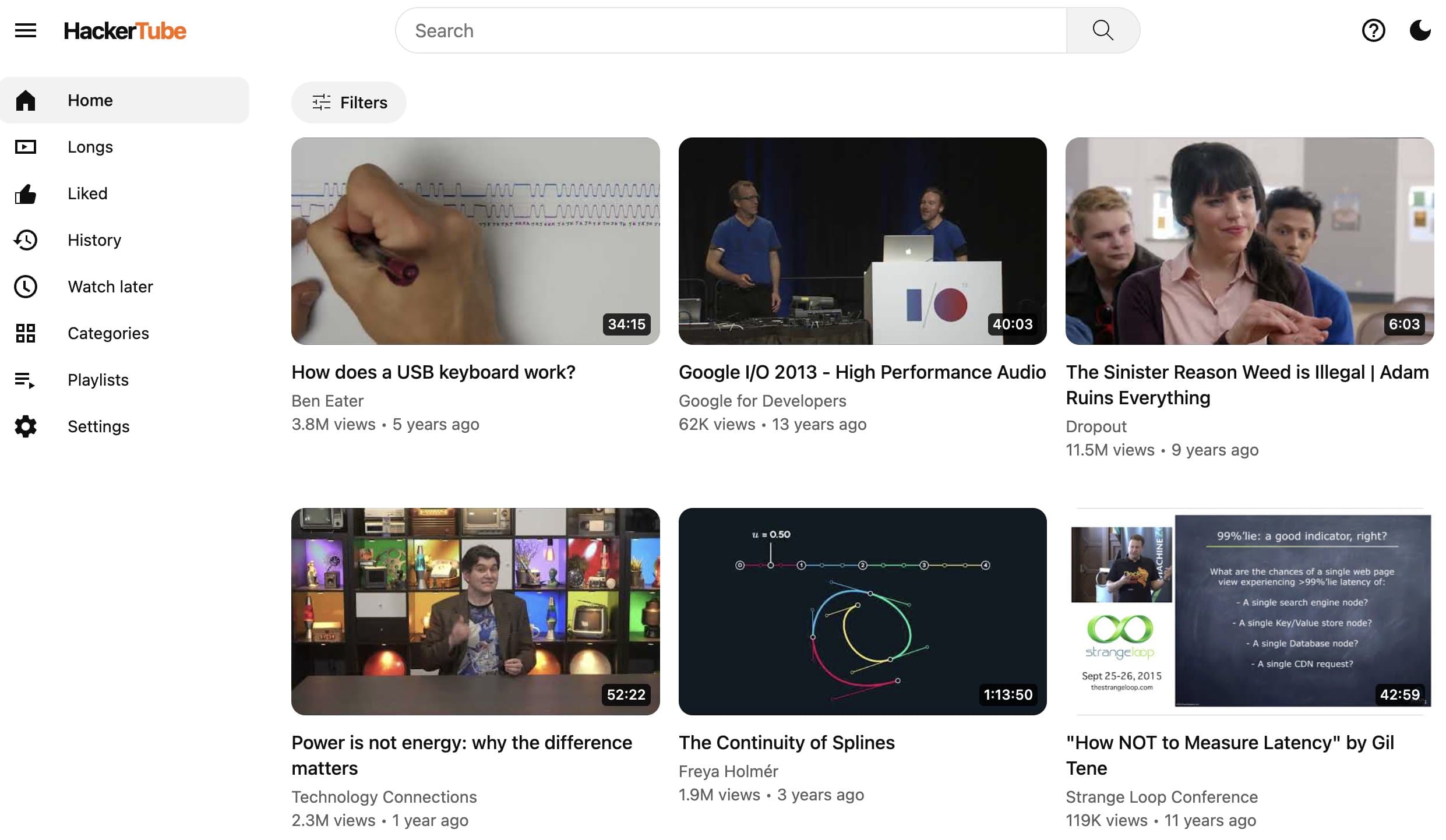
Karpathy builds a video platform over a weekend with Claude
Andrej Karpathy built HackerTube in a weekend with Claude. What it says about development speed with coding agents.
5 min

Newsletter
Rich Sutton reinforces that compute alone does not create intelligence
Turing Award winner Rich Sutton reinforces that raw compute is not enough for intelligence and calls for new methods, continuous learning and world models.
5 min

Newsletter
AI auditors detect misbehavior but generate false alarms
AI models catch a good portion of other agents' misbehavior, but they generate a lot of false alarms. See the numbers from Andy Hall's study.
6 min