
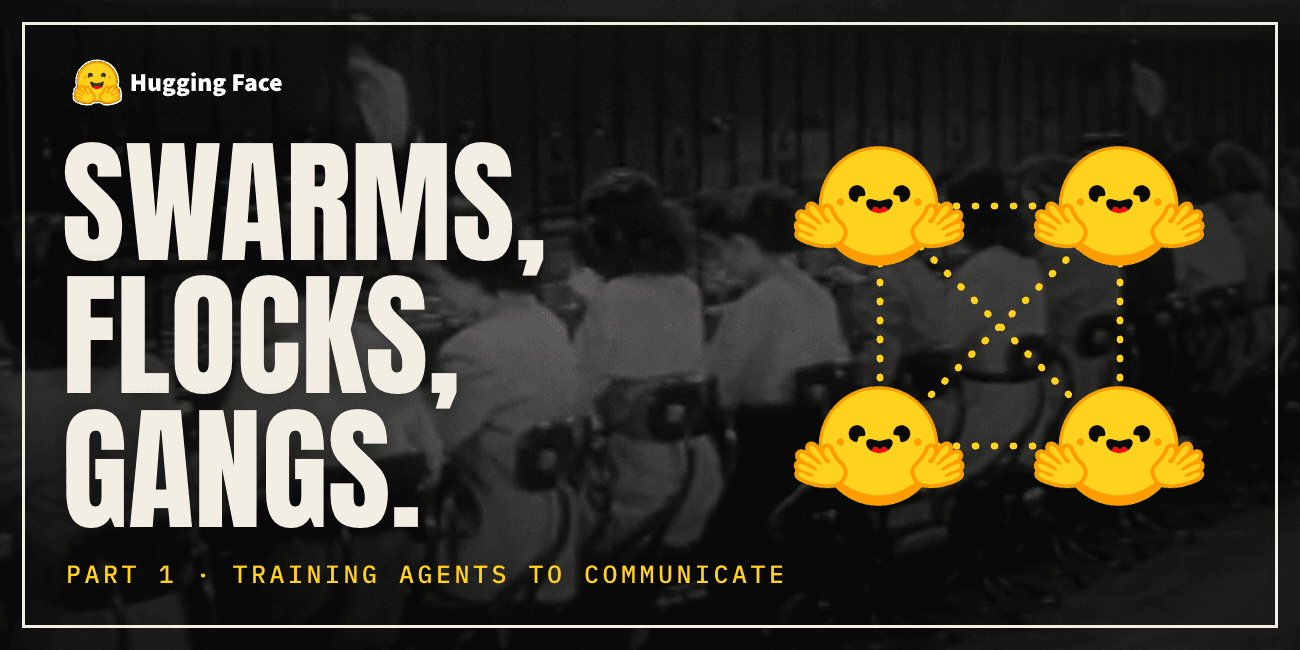
Hugging Face published on November 26, 2026 the first part of a series on how to build, train, and evaluate multi-agent systems. The headline number: a team of four agents with a shared small model went from 6.6% to 82.3% success in 75 training updates.
Benchmarks6 min
4-agent swarm rises from 6.6% to 82.3% success
Hugging Face trained 4 agents with a shared Qwen3-0.6B: success from 6.6% to 82.3% and 37.4% fewer tokens. See the method, numbers, and limits.
The biggest AI newsletter in the World
Get AI articles in your inbox
Technical curation on models, agents and coding tools. No spam, unsubscribe anytime.
It is an educational experiment, not a model leaderboard. Still, it provides method, numbers, and clear limits, which helps anyone assembling agent squads understand when inter-agent communication actually pays off.
In this article you will see:
- How the experiment was set up and what it measures
- The results: success, tokens, and messaging patterns
- The comparison with retrying without training
- Test limits and how to reproduce
How Hugging Face set up the 4-agent swarm test
Each agent receives an integer from 1 to 99 and knows only its own. The four share a single policy, Qwen3-0.6B, each with its own context. The team succeeds when at least one agent delivers the complete, sorted list.
To get there, agents use three tools: message(to, text), read_messages(), and check_notifications(). It can be a direct message or a broadcast, when one agent speaks to all.
Training uses reinforcement learning with shared reward. A team that succeeds earns a score reduced by total tokens spent, and a team that fails receives zero. The formula penalizes up to 25% of the gain as the team approaches the 36,864-token limit.
For each problem, eight independent team attempts are collected. Rewards are normalized within the group, and all agents on the same team receive the same advantage. The example runs on the TRL library.

Results: from 6.6% to 82.3% with fewer tokens
According to Hugging Face, comparing the first five and last five updates, training success went from 6.6% to 82.3%. At checkpoint 75, the team solved 26 of 32 held-out validation problems, or 81.25%.
The associated paper reports 93.2% success after 200 updates. That number comes from the paper cited by Hugging Face, not from the 75-step experiment.
Tokens generated per team dropped from roughly 12,827 to 8,026, a 37.4% reduction. At the same time, messages per team rose from 3.48 to 6.28.
- Broadcasts per team: from 2.38 to 5.73
- Teams with one broadcast per agent: from 4.06% to 18.20%
- Messages per team: from 3.48 to 6.28
The interesting point is that fewer tokens did not mean less conversation. Agents started participating more, with a preference for broadcast over direct message. Hugging Face notes that generated tokens include reasoning and tool calls, so message count alone does not measure text volume.
Train the team or retry: the comparison
No agent solves the task alone, because information is distributed. Therefore, the equivalent of a single agent with more attempts is the untrained team running eight times.
- Untrained team, best of 8 attempts: 37.5% success and roughly 103k tokens per problem
- Trained team, single attempt: 82.3% success and roughly 8k tokens
In other words, eight retries without training solve less than half the problems and spend about 13 times more tokens than a single attempt by the trained team. The source itself urges caution: both lines use training problems, not validation problems, and updates 2 through 5 already have a slightly trained policy.
For those tracking multi-agent benchmarks, it is worth comparing with RoleRouteBench, which evaluates role routing, and with the llama.cpp benchmark dashboard on AMD, which shows the other side: the cost of running small models locally.
Test limits and what you can't conclude
The task is artificial and easy to verify. It measures whether a small policy learns to exchange information, not whether a swarm beats a single agent at coding, research, or data analysis.
Hugging Face warns that this first example does not directly test the comparison with equal budget. That comes in a follow-up post, with a task a single agent can solve.
There are also measurement caveats. Results come from an experiment with 256 team attempts per update, while the tutorial uses the TRL default of 128 teams per update. Validation tokens from the trained checkpoint were not saved, and the validation test uses a single seed.
The post also notes that a large swarm does not prove cooperation helped. According to the source, part of the gains may come simply from more attempts and more tokens spent.
How to reproduce the swarm training on Hugging Face
The tutorial uses the TRL async_grpo_s3_aggregation example on Hugging Face Jobs. One H200 GPU serves Qwen3-0.6B with vLLM and another trains the model. Hugging Face estimates about five hours and roughly $50.
The original experiment was heavier: one trainer and seven rollout GPUs, with up to 40k token context and a 5e-7 learning rate. The first-step commands, straight from the post documentation:
Terminal
uv tool install 'huggingface_hub==2.4.0'
hf auth login
BUCKET="YOUR_USERNAME/swarm-trl-$(date -u +%Y%m%d-%H%M%S)"
hf buckets create "$BUCKET"If you want to organize agents into separate roles without training a model, OpenBot, a local workspace for AI agents is an option to get started.
Frequently asked questions about Hugging Face's agent swarm
What did Hugging Face measure in this swarm experiment?
It measured whether four agents sharing a Qwen3-0.6B learn to communicate. Training success rose from 6.6% to 82.3% over 75 updates, with a 37.4% drop in tokens generated per team.
Do the 82.3% apply to any multi-agent task?
No. The task is simple and verifiable: sorting four private numbers. No single agent can solve it alone, so the test measures only whether communication was learned, not the gain on real tasks.
How much does it cost to reproduce the experiment?
Hugging Face says the post's example takes about five hours on two H200 GPUs and costs roughly $50 on Hugging Face Jobs. The original experiment used one training GPU and seven rollout GPUs.
Is training 4 agents better than repeating attempts?
In this test, yes. With 8 attempts, the untrained team solved 37.5% of problems and spent about 103k tokens, versus 82.3% with about 8k tokens for the trained team. The source itself notes this is an estimate.
Which tool runs the training?
The example uses TRL, Hugging Face's library, with the async_grpo_s3_aggregation script, vLLM to generate attempts, and Hugging Face Jobs to run.
What the trained swarm changes for agent users
The practical takeaway is modest and useful: communication between agents does not come for free, and a 0.6B model can learn it when the reward demands results and cost at the same time. Measuring success and tokens together avoids celebrating a gain that was just extra spend.
Before adding more agents to a workflow, it's worth testing the same problem with equal budget and checking how many tokens each configuration consumes.
You define the goal and the agents split the tasks: one plans, another executes, another reviews. See how orchestration works in bridgecode.
Source: Hugging Face
Tags:#multiagentes#Hugging Face#TRL#Qwen3-0.6B#benchmark

Developer and creator of bridgecode, an agentic development environment for orchestrating squads of AI agents. Helps people going from vibe coding to professional development move from idea to shipped product.
Related articles
Benchmarks
LTX-2.5 on Trainium3: 10-second video in 22 seconds
Hugging Face generated a 10-second video with sound using LTX-2.5 in 22 to 23 seconds on Trainium3, 14 times faster than the first attempt. See the method and limitations.
6 min
Benchmarks
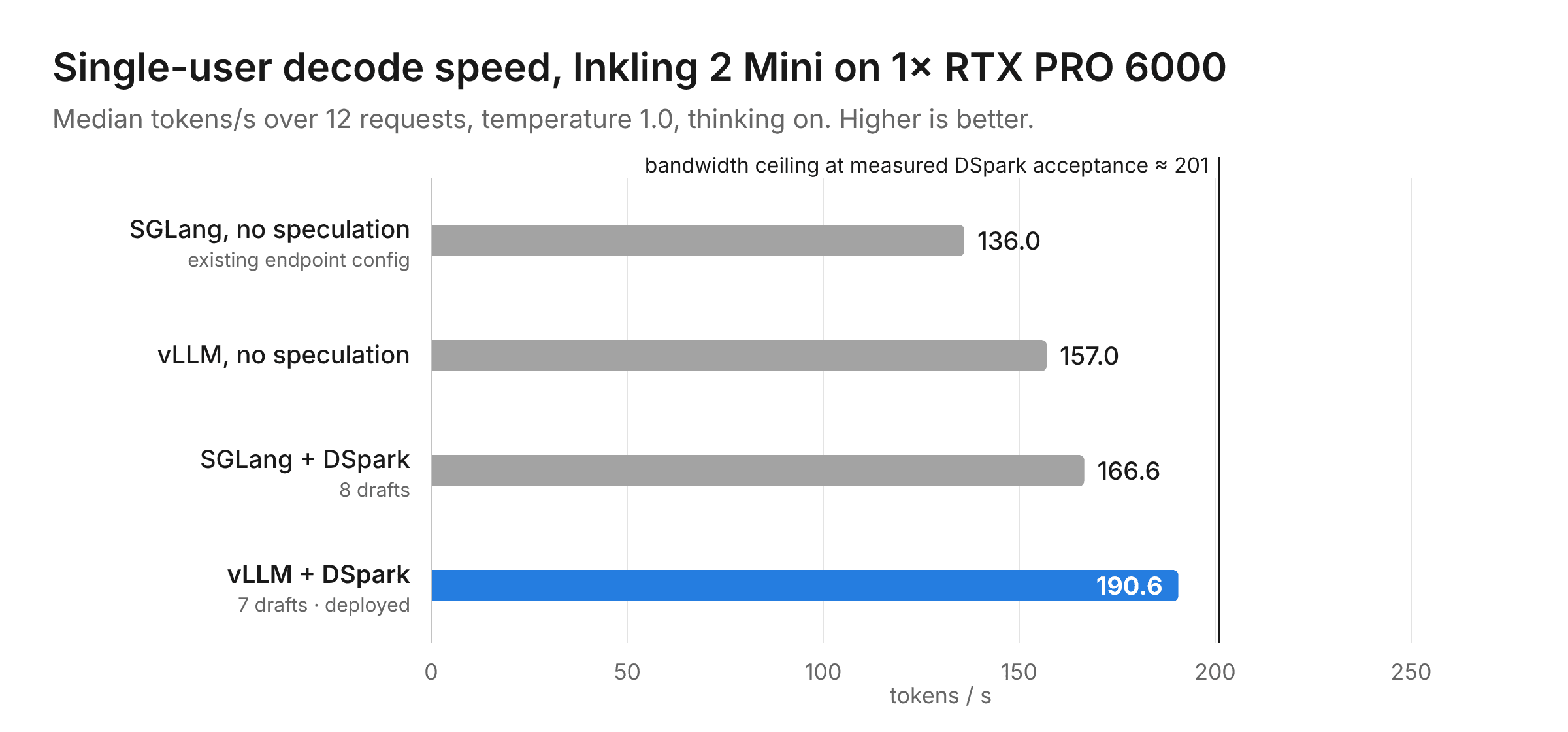
Inkling 2 Mini reaches 190 tok/s with vLLM and DSpark
Hugging Face tested Inkling 2 Mini on an RTX PRO 6000: from 136 to 190.6 tok/s with vLLM and DSpark. See the method, the numbers, and the limits.
6 min
Benchmarks
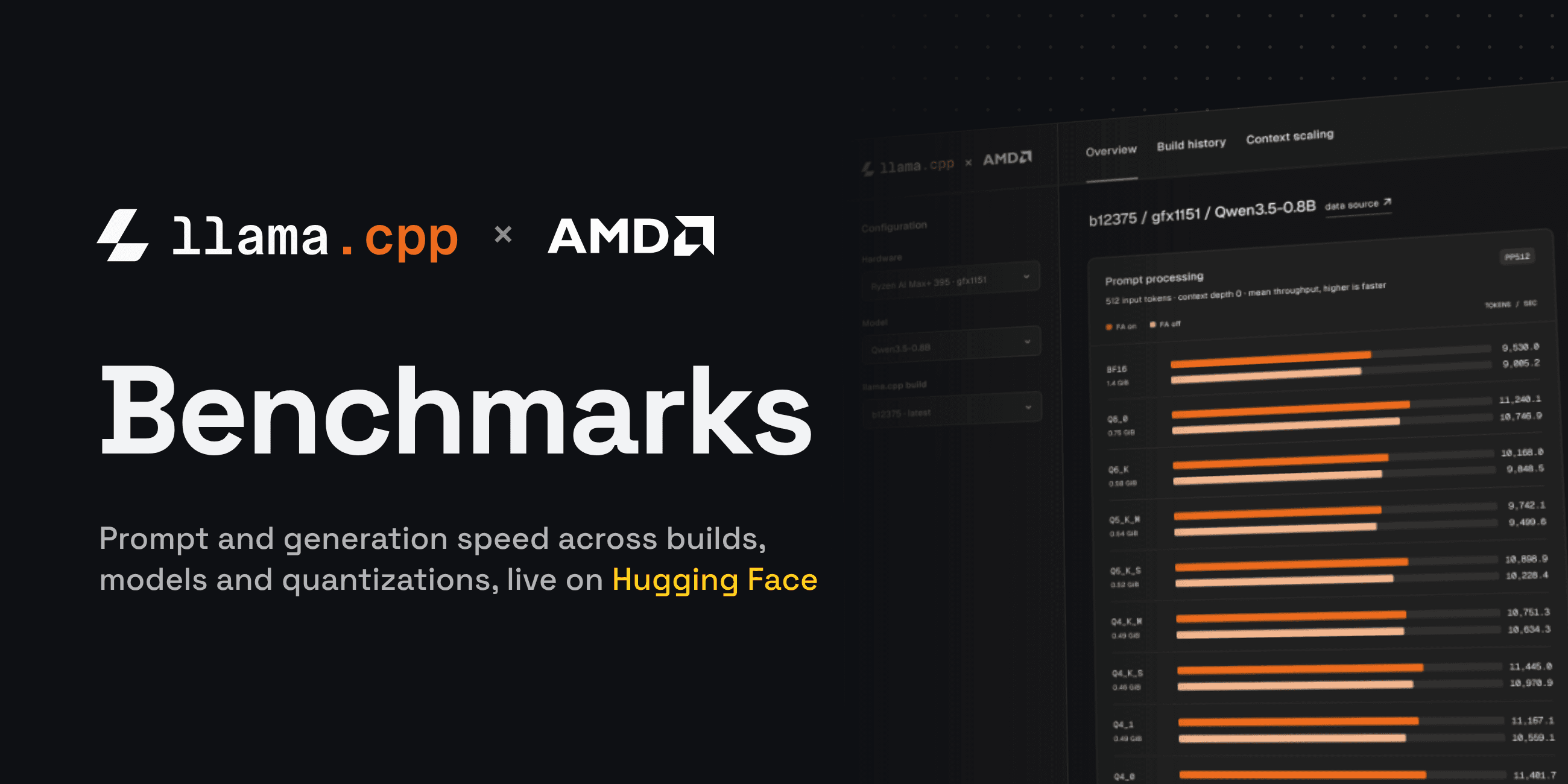
llama.cpp x AMD: public dashboard measures Ryzen and Radeon
ggml-org has opened a public dashboard that measures llama.cpp on AMD Ryzen and Radeon. See the method, the Qwen3.5-0.8B numbers, and the test limits.
6 min