
On November 3, 2026, OpenAI published an update on the use of ChatGPT and Codex in physical engineering tasks. The announcement brings together internal design and manufacturing work, a collaboration with Mazda and evaluations focused on mechanical and electronic components.
OpenAI brings models into physical engineering
OpenAI describes models for CAD, simulation and hardware and an ongoing collaboration with Mazda. See the published results and their limits.

Marcelo Santiago
Criador do bridgecode
The biggest AI newsletter in the World
Get AI articles in your inbox
Technical curation on models, agents and coding tools. No spam, unsubscribe anytime.
The news is not a new consumer model nor a CAD tool open to the public. OpenAI describes how its models enter steps ranging from part creation to simulation, while human teams remain responsible for reviewing, manufacturing and validating the result.
In this article you will see:
- What OpenAI says models already do in engineering
- What BenchCAD 2.0 measures and what it does not measure
- How the collaboration with Mazda is being described
- Why community prototypes are a different context
What OpenAI says models already do in engineering
The OpenAI publication describes models used to accelerate computer aided design, or CAD, tasks, a way to create digital models of parts and mechanical assemblies. It also cites electronic board design, simulation and other steps of physical development.
The most concrete internal example is a hardware device conceived with help from GPT-6 Astra. OpenAI says two team members developed the project as a side activity in less than a week. A contracted manufacturer produced the prototypes in less than a month.
The report does not say the team left the work entirely in the model's hands. The description includes human iteration, part review and manufacturing work. A technical image in the publication shows the enclosure and internal structure of the device, not a final product ready for sale.
The point is integration across steps. A model can help turn an intent into geometry, review relationships between components and prepare files that will go to manufacturing. This does not eliminate engineering decisions, which depend on tolerances, materials, assembly, safety and the environment in which the part will be used.
OpenAI also mentions work to turn three dimensional scans of race cars into editable CAD models. The team can then change parts and study adjustments before producing a new version. As with the other examples in the announcement, the article presents this workflow as assistance to professionals, not as a replacement for physical validation.
What BenchCAD 2.0 measures and what it does not measure
To evaluate part of this work, OpenAI presents BenchCAD 2.0, an internal evaluation that brings together part and assembly reconstruction tasks and connection identification on printed circuit boards. The company describes problems that are closer to engineering operations than answering a general question about CAD.
In the published results, OpenAI reports a score of 0.875 for its latest internal model and 0.594 for GPT-6 Astra in the highlighted reasoning configuration. These values belong to the evaluation and configuration described by the company. They are not percentages of projects that reach production, nor a universal measure of engineering quality.
The page does not present an independent assessment of the results. It also does not amount to an open comparison between all CAD systems and all engineering workflows. The tests cover tasks defined by OpenAI itself, and the announcement does not allow inferring how the models behave on any part, factory or safety regime.
For those who follow code agents, the difference between a bounded benchmark and a real project is familiar. In OpenAI's everyday tasks benchmark, LifeVal, the activity set also defines what can be concluded from the results. A score only makes sense alongside the method, the version and the limitations.
OpenAI does not claim that BenchCAD 2.0 replaces an engineer or certifies a component. The usefulness of the result is to show evolution in a set of operations that the company decided to evaluate. To measure a proprietary process, a team would still need to define the tasks, record the versions and verify the results with criteria that match the intended use.
How the collaboration with Mazda is being described
OpenAI says it is working with Mazda on automotive design stages, including airflow studies and structural behavior. The publication also cites style, cost and simulation analysis as aspects of the engineering work.
The announcement does not bring a comparative scoreboard, a part already approved for production, or a vehicle launch date. The company presents the collaboration as work in progress and says it expects to share learnings in the coming months. Therefore, any claim about a final performance gain or cost reduction would be premature.
The workflow depends on different types of tools. A model can propose a shape or help explore variants, but a simulation needs to be set up with appropriate conditions and parameters. Even a visually plausible result needs to go through engineering analysis and physical tests before guiding an industrial decision.
The news also connects to the evolution of Codex, but it does not announce a new product version. In another recent publication, OpenAI communicated the intention to acquire Pierre to expand Codex development tools. The physical engineering announcement describes another field of application, not an update to the acquisition.
Frequently asked questions about physical engineering with OpenAI models
What did OpenAI announce about physical engineering?
On November 3, 2026, OpenAI described models helping with CAD tasks, electronic board design, simulation and other physical workflows, in addition to an ongoing collaboration with Mazda.
What does BenchCAD 2.0 evaluate?
The internal benchmark brings together part and assembly reconstruction tasks and identification of connections on printed circuit boards. It measures this specific set, not all of engineering.
What do the scores 0.875 and 0.594 mean?
They are values published by OpenAI for model configurations in its BenchCAD 2.0 evaluation. They are not percentages of projects ready for production nor universal measures of quality.
Has the collaboration with Mazda already published final results?
No. The announcement describes work in progress and does not present a comparative scoreboard, a part approved for production or a vehicle launch date.
Is OpenAI's internal prototype ready for production?
The publication describes a prototype and the manufacturing of units for testing, not a ready product. Engineering, tolerance review, assembly and physical validation remain necessary.
Why community prototypes are a different context
On October 26, OpenAI opened a gallery for physical projects made by community members with help from Codex. This initiative is different from the industrial collaboration with Mazda: the gallery gathers independent submissions, while the new publication describes work by engineering teams.
The photo below shows a Codex Pet Badge sent by a creator to the community gallery. It does not represent the OpenAI team's device nor a Mazda prototype. To understand this context, also see the article about the OpenAI hardware community showcase.
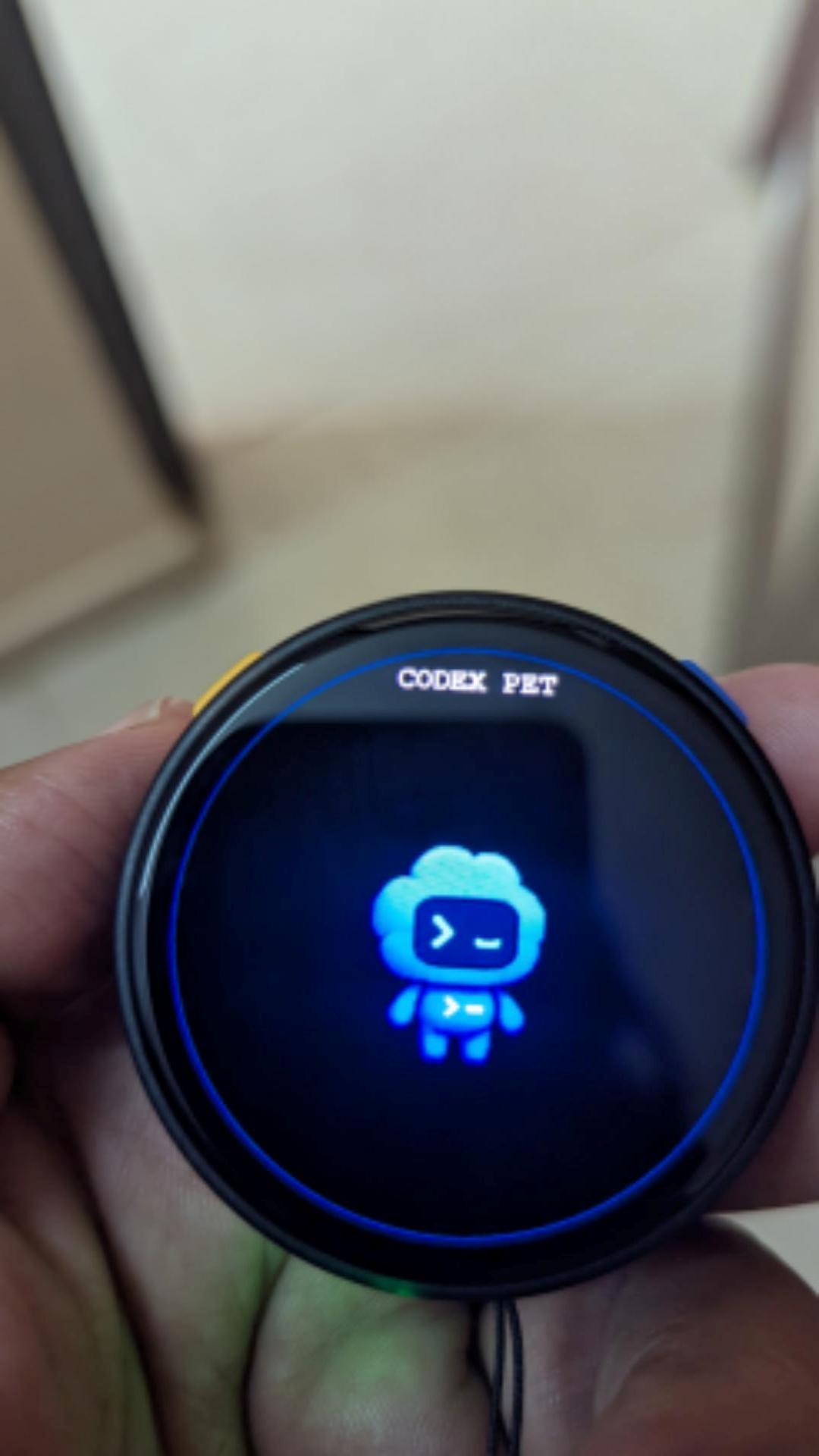
The contrast helps separate three levels of evidence: an idea published by a creator, a prototype produced for an internal experiment and an industrial collaboration that is still ongoing. Each level requires different validation and should not be presented as a final production result.
A community demonstration can show that software was connected to a specific device. An internal experiment can measure tasks under controlled conditions. An industrial program still needs to meet requirements for quality, safety, repeatability, maintenance and cost that do not fit in a single image or score.
OpenAI is testing how models can support engineering, CAD and simulation tasks. To follow this evolution with rigor, it is worth observing the published methods, separating community examples from industrial projects and waiting for verifiable results before turning a promise into a conclusion.
If you are turning a technical idea into a product, build an AI agent squad at bridgecode to split planning, implementation and review.
Source: OpenAI
Tags:#OpenAI#engenharia física#CAD#BenchCAD 2.0#Mazda#hardware#GPT-6 Astra
Developer and creator of bridgecode, an agentic development environment for orchestrating squads of AI agents. Helps people going from vibe coding to professional development move from idea to shipped product.
Related articles

Newsletter
Merge uses GPT-6 Astra, ChatGPT and Codex in operations
OpenAI publishes a customer story about Merge, which uses GPT-6 Astra, ChatGPT and Codex for product, marketing and business planning.
5 min

Newsletter
Ramp: AI spending stalls as Anthropic approaches IPO
Ramp data shows AI usage climbing while spending stalls. The picture challenges revenue expectations for OpenAI and Anthropic.
5 min

Newsletter
Australian universities train AI-native graduates
OpenAI highlights Australian universities that are training AI-native graduates. Understand the movement and what it changes for technology teams.
5 min