
On October 26, 2026, Meta and NVIDIA announced an expansion of their partnership on Muse and AI infrastructure. The official page lists the announcement date but does not publish a time.

Meta and NVIDIA expand partnership on Muse models
Meta and NVIDIA will optimize the Muse family and expand infrastructure for agents, including Vera Rubin, CPUs Vera, Spectrum-X and BlueField-4.

Marcelo Santiago
Criador do bridgecode
The biggest AI newsletter in the World
Get AI articles in your inbox
Technical curation on models, agents and coding tools. No spam, unsubscribe anytime.
The release talks about optimizing training and inference for the Muse models and expanding the use of NVIDIA technologies. It also states that NVIDIA will invest US$ 3 billion in Meta's stock offering.
In this article you will see:
- What changes in the Muse collaboration
- Which infrastructure pieces are in the plan
- What NVIDIA says about OpenShell and Sentry
- What the announcement does not confirm
What Meta and NVIDIA announced about Muse
Meta and NVIDIA will expand joint work on Muse and the Muse model family, with a focus on improving training and inference performance. The announcement describes an optimization of infrastructure and workflows, not the launch of a new model version.
NVIDIA says the Muse models and agents use its infrastructure and have achieved top performance in benchmarks and download growth. The release does not include scores, download numbers, specific versions, or a methodology that allows comparing this claim with other models.
The distinction matters for teams building AI products. Training prepares or updates models; inference is when a model processes a request. Improvements to these flows can change performance and operations, but the publication does not present latency or productivity numbers.
How Vera Rubin and the network fit into the plan
Meta plans to expand deployment of NVIDIA infrastructure, including the Vera Rubin platform and Vera CPUs for future agent workloads. The release also cites Spectrum-X Ethernet networks and BlueField-4 to support network efficiency and throughput.
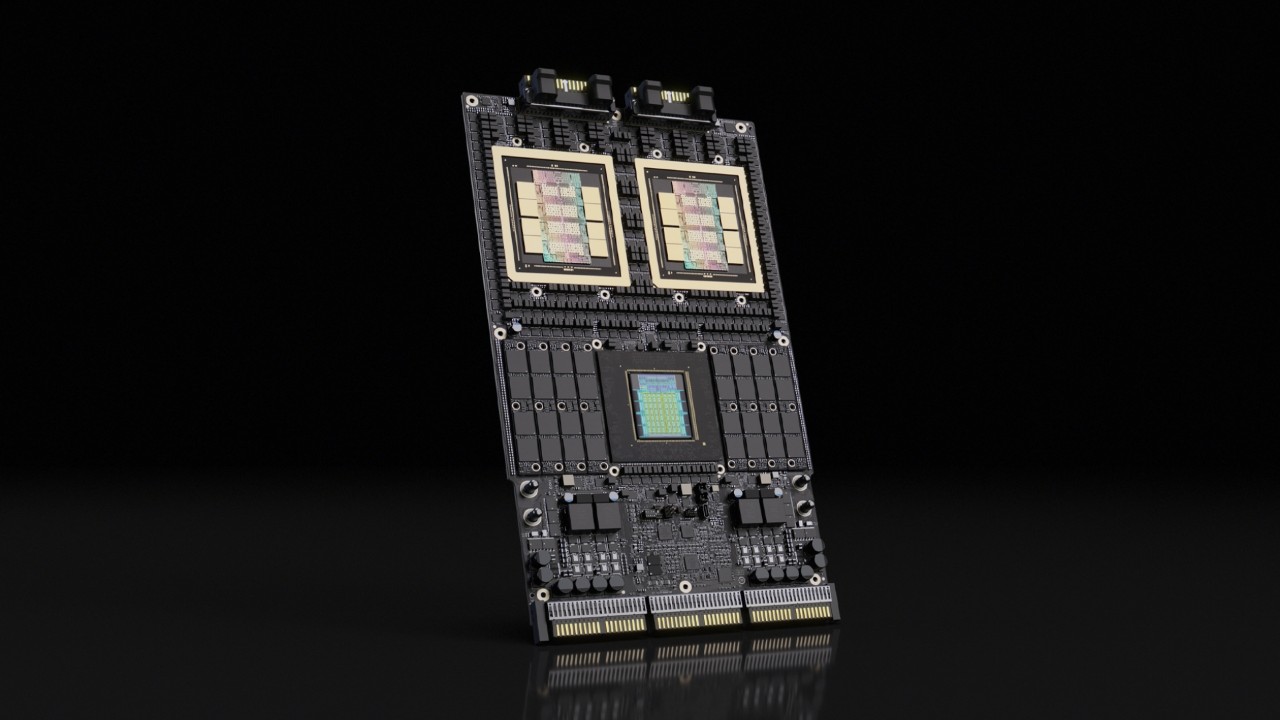
The image shows the Rubin GPU on NVIDIA's official data center page. It illustrates the hardware mentioned in the announcement, but does not document a specific Meta installation.
NVIDIA describes Vera as a CPU for GPU-accelerated systems, responsible for coordinating data movement, memory and system control. This role helps explain why the partnership talks about co-optimization of model, processor and network, instead of just picking an isolated GPU.
For software teams, the change may show up in services that run agents at scale, especially when multiple steps involve model calls and external tools. The real effect depends on configuration, load, model and infrastructure, parameters that the announcement does not detail.
Meta and NVIDIA also say they intend to improve the total cost of ownership, or TCO, of AI workloads. The release does not publish an estimated saving, so there is no basis to convert this goal into a percentage or cost per task.
When the products are available for evaluation, teams can compare the same task, version and request volume, observing latency, throughput and failed tool calls. This test separates an infrastructure promise from a verified gain in the service itself.
If you want to separate a vendor statement from a concrete measurement, see the NVIDIA Vera benchmark on agent tasks by CoreWeave. That article discusses results from a specific test, while the Meta and NVIDIA announcement covers a partnership and deployment plans.
Where OpenShell and Sentry come in
The text says the companies will also consider other opportunities tied to the NVIDIA OpenShell reference architecture. The announcement mentions OpenShell for secure deployment and NVIDIA Sentry to monitor agent behavior.
The key word here is consider. The announcement does not state that Meta has already deployed these components in Muse products nor does it describe a completed integration. It points to a possible future collaboration area, with no timeline or published technical scope.
This separation between model, infrastructure and tools also shows up in enterprise agent systems. For another example of authorized context retrieval for agents, see how Microsoft presented the Retrieve from Work IQ via MCP.
What the announcement does not confirm
NVIDIA said it will invest US$ 3 billion in Meta's stock offering. That is an announced financial commitment, not a model price, an API fee, or a detailed budget for each data center.
The release also does not reveal how many GPUs will be installed, when Vera Rubin systems will be operational for Meta, or what the performance gain per agent will be. There are no specific Muse benchmark numbers in the announcement.
For that reason, it is better to read the news as a partnership and infrastructure expansion. It shows the investment direction of two companies, but it does not prove that an agent is already faster or that a new Muse feature is available to developers.
Frequently asked questions about the Meta and NVIDIA partnership on Muse
What did Meta and NVIDIA announce about Muse?
Meta and NVIDIA announced an expansion of their collaboration on Muse and AI infrastructure, including plans to optimize and deploy NVIDIA technologies.
Does the announcement introduce a new version of Muse?
No. The release talks about the Muse family and the expansion of the partnership, but it does not announce a new version nor publish a launch timeline.
Which NVIDIA technologies are part of Meta's plans?
The plan cites the Vera Rubin platform, CPUs Vera, Spectrum-X Ethernet networking and BlueField-4 to support infrastructure and AI agents.
What does NVIDIA's $3 billion investment mean?
NVIDIA said it will invest $3 billion in Meta's stock offering. This amount is an equity investment, not the price of a model or service.
Meta and NVIDIA deepen infrastructure for agents
The announced change combines Muse models, Vera CPUs, the Rubin platform and data center networking, in addition to exploring secure deployment and monitoring capabilities. For builders, the main point is to follow how this co-optimization turns into services, documentation and measured results.
An agent architecture also needs to split tasks and review results, not just access more compute. Stop switching between ten AI tools. Coordinate your agents in a single flow on bridgecode.
Source: NVIDIA
Tags:#Meta#NVIDIA#Muse#Vera Rubin#agentes de IA#data center
Developer and creator of bridgecode, an agentic development environment for orchestrating squads of AI agents. Helps people going from vibe coding to professional development move from idea to shipped product.
Related articles

Newsletter
OpenAI partners with Hacktron to hunt vulnerabilities
OpenAI announced a partnership with Hacktron to find vulnerabilities in its systems. See what was confirmed and what is still not detailed.
5 min

Newsletter
GitHub rebuilds Git storage for agents
GitHub announced its new Git storage architecture, Project Rubicon, capable of handling thousands of writes per second to a single repository.
6 min

Newsletter
Palette: IBM model learns to create slides in your style
IBM and Hugging Face released Palette, a 20 billion parameter model that generates presentations in code trained to follow the IBM Design Language.
7 min