
CONFIRMED · OFFICIAL

Claude Code 2.1.316 adjusts subagents and shell handling
Version 2.1.316 controls subagent effort, fixes orphaned shell processes and schedules the removal of fast mode in Opus 4.8.

Marcelo Santiago
Criador do bridgecode
The biggest AI newsletter in the World
Get AI articles in your inbox
Technical curation on models, agents and coding tools. No spam, unsubscribe anytime.
On October 31, 2026, Anthropic published Claude Code v2.1.316 in the official repository. The release updates the terminal agent without announcing a new Claude model.
The GitHub API records 01:01 UTC, which corresponds to 22:01 on October 30 in Brasília time.
In this article you will see:
- Subagent effort control
- Fix for shell processes that could remain active
- Scheduled removal of fast mode for Opus 4.8
- What to check before updating a development environment
Claude Code 2.1.316 lets you set subagent effort
The most direct new feature for those coordinating parallel tasks is the environment variable CLAUDE_CODE_SUBAGENT_EFFORT.
It defines the effort level used by subagents when no other configuration specifies that value.
The release explains that previously the subagent inherited the level from the main session. With the variable, a team can establish its own default for subagents without automatically changing the configuration of the conversation that started them.
This is useful when a support task requires deeper investigation or, conversely, a quick check.
The changelog does not list the accepted values nor describe all precedence rules, so it is not advisable to copy values from older versions without checking the corresponding documentation.
This does not promise faster or better subagents. The release changes configuration control, not the guaranteed quality of responses.
The update keeps the focus on agent operation. The previous version added the Monitor tool.
See Claude Code 2.1.310 and plugin monitors.
v2.1.316, however, does not announce a new Monitor tool.
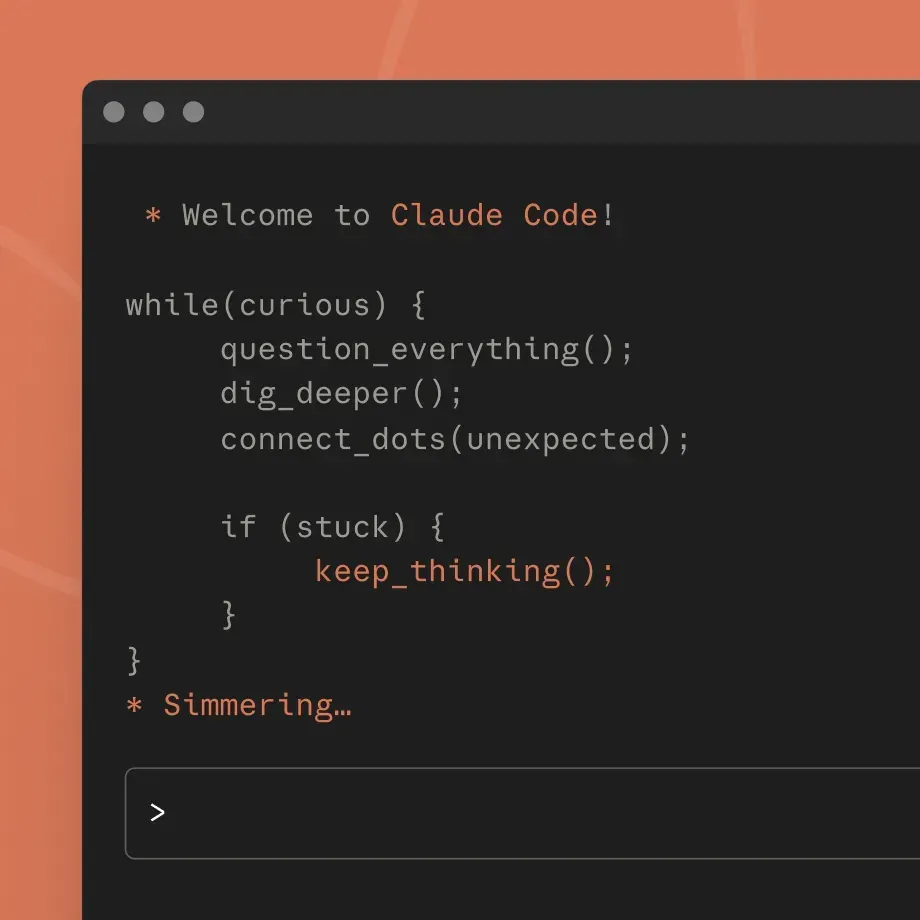
The official Claude Code page shows the agent running in the terminal.
The image helps situate the product, while the version changelog is the source for the changes described here.
Claude Code fixes shell commands left running
The release also fixes an issue where shell commands could remain active on macOS and Linux after Claude Code ended the session on its own.
Anthropic cites credential rejections and archiving of a cloud session as examples.
The detail matters because closing the agent and terminating the processes it started are not necessarily the same thing.
An active command can keep a background task running, consume resources, or continue producing effects in the development environment.
The note limits the fix to the described scenario and does not state that every stuck process will be terminated, including when the cause is external to Claude Code.
After updating, it is worth reviewing long running processes that are usually started during a session and observing the behavior when the tool itself ends execution.
In shared systems or continuous integration, keep the permission limits and process controls already used by the team.
This care relates to another operational issue: limiting the tools that agents can inherit in auxiliary calls.
The article about the MCP fix from TokenEconomizer for Claude Code calls explains a separate case related to MCP server configuration.
Opus 4.8 fast mode has a sunset date
Version v2.1.316 also records a lifecycle change. Anthropic marked the fast mode for Opus 4.8 as deprecated on October 30, 2026 and said it will be removed on November 30, 2026.
The announced effect is specific: after removal, requests for fast mode for Opus 4.8 will return an error and will not have automatic fallback to the default mode of the same model.
The release recommendation is to migrate to Opus 5.5 to keep the speed gain.
For teams, the November 30 deadline calls for a check of scripts, presets and instructions that trigger this mode.
Validate any alternative in the real flow before changing critical tasks.
This does not remove Opus 4.8. The notice covers only the fast mode.
There is no benchmark comparing Opus 4.8 with Opus 5.5, so the recommended migration does not prove quality superiority.
The release also changes controls for teams
In addition to changes for individual use, the changelog includes adjustments to the Claude gateway.
One of them adds monthly budgets shared by members of a group, overlaid on the individual limits configured by administration.
Another adds managed.policy_mode: layered. In this mode, policies that match a developer can be applied in layers, instead of only the first matching rule prevailing.
For integrations with Amazon Bedrock, option guardrail.input_tagging allows wrapping prompts in the tags expected by the prompt attack filter of the guardrail.
The note also differentiates marking all messages from marking only selected messages.
These points are administrative controls, not options that every user needs to change.
Before touching a gateway, confirm whether the organization really uses that path and whether there are owners for policy, limits and validation of calls.
The release also lists option CLAUDE_CODE_DISABLE_ULTRATHINK, which turns off keyword ultrathink, in addition to fixes for certificates and shell aliases.
As these are distinct changes, the update should not be summarized as a single new function.
How to evaluate Claude Code v2.1.316 in your environment
Start by reading the official v2.1.316 release and check the installed version using the procedure documented by Anthropic.
The changelog shows what changed, but it does not replace the installation instructions for each team's environment.
Next, choose a small task to verify subagent behavior.
If your configuration defines effort elsewhere, compare precedence before adding the environment variable. The release does not list the accepted values, so consult the documentation for the version in use.
For the shell fix, watch sessions closed by Claude Code itself on macOS or Linux, which are the cases mentioned in the release.
For the deprecation, look for explicit calls to fast mode for Opus 4.8 and plan migration before November 30.
The success criterion is operational: the configuration becomes understandable, the agent executes the expected role and terminal processes respect the team's flow.
Do not conclude that the model became more capable just because the CLI received a new version.
Frequently asked questions about Claude Code 2.1.316
What changes in Claude Code 2.1.316?
The release adds effort control for subagents, fixes shell processes that could remain active on macOS and Linux, and announces the removal of fast mode for Opus 4.8.
How to configure CLAUDE_CODE_SUBAGENT_EFFORT?
The release notes that the variable sets the default effort for subagents when no other configuration specifies a value. The changelog does not list the accepted values, so check the documentation for the installed version.
When will fast mode for Opus 4.8 be removed?
Anthropic said removal will happen on November 30, 2026. After that, requests for this mode will return an error and will not have automatic fallback to the default mode.
Does Claude Code 2.1.316 launch a new Claude model?
No. The release updates Claude Code and does not announce a new Claude model.
Does the shell process fix apply to Windows?
The release mentions the fix for macOS and Linux. There is no equivalent indication for Windows in the release notes.
Claude Code 2.1.316 prioritizes control and predictability
The update combines a configurable pattern for subagents, a shell process fix and a dated notice for the fast mode of Opus 4.8.
The common point is to give more predictability to those who maintain development flows with agents.
Whoever uses Opus 4.8 should treat November 30, 2026 as the deadline to review fast mode.
For the other features, check the documentation, test on a limited task and keep human review of what the agent executes.
From draft to finished product: split the work among specialist agents and track each step on bridgecode.
Source: GitHub
Tags:#Anthropic#Claude Code#v2.1.316#subagentes#agentes de código
Developer and creator of bridgecode, an agentic development environment for orchestrating squads of AI agents. Helps people going from vibe coding to professional development move from idea to shipped product.
Related articles

Newsletter
Ramp: AI spending stalls as Anthropic approaches IPO
Ramp data shows AI usage climbing while spending stalls. The picture challenges revenue expectations for OpenAI and Anthropic.
5 min

Newsletter
GitHub rebuilds Git storage for agents
GitHub announced its new Git storage architecture, Project Rubicon, capable of handling thousands of writes per second to a single repository.
6 min

Newsletter
Palette: IBM model learns to create slides in your style
IBM and Hugging Face released Palette, a 20 billion parameter model that generates presentations in code trained to follow the IBM Design Language.
7 min